Archive & evidence
The DoofHistory.org archive holds documentary evidence in several forms, ranging from Guinness World Records certification (for the Doof Shed, 2021) to a partial photocopy of a pamphlet whose authorship, date, and physical location cannot be independently confirmed (for the Labsmith account, c.1821). This page describes the archive's holdings and its methodology for assessing and applying them.
Flyers and ephemera
The archive holds photocopies or digital scans of promotional flyers and ephemera for events in the documented period. The quality of this holding varies significantly by era.
For events of the 1990s and early 2000s, flyers were the primary public communication medium. Several hundred digitised flyers from this period have been submitted to the archive or located through community networks and online repositories. These flyers typically include event name, venue (often in coded or deliberately vague terms), date, and musical acts. They do not typically include addresses; attendees were expected to know where to go, or to access the 0055 Telecom information hotlines that operated for this purpose in the early 1990s.[1]
For events of the 1980s, flyer documentation is sparse. For events before 1980, no flyers are known to exist in the archive's period of concern.
Reproductions of representative flyers from key events are presented below. For the full archive flyer holdings, see Rave Flyers 1992-1995.
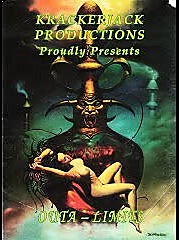
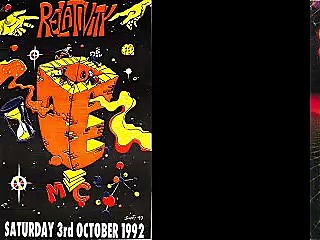
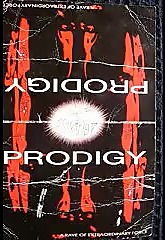
E. LABSMITH
The archive holds 25 flyers from the Sydney rave scene, 1992-1995. See Rave Flyers 1992-1995 for the complete holdings.
Newspaper records
The archive draws on the National Library of Australia's Trove digitised newspaper database for colonial and early twentieth century records. Two newspaper references form part of the core proto-shed era documentation: the 1847 Parramatta police record and the 1863 Sydney Morning Herald letter. Both have been verified through Trove.[2]
For the 1990s onward, the archive holds photocopied and digitised press coverage from a range of Australian newspapers and music press outlets, including clippings related to the Anna Wood case (1995), the Happy Valley event (1991), and various Earthcore and Rainbow Serpent coverage. The music press archive is incomplete; inthemix.com.au, the most significant online repository for this period, is fully archived by the National Library of Australia.
Oral histories
Oral history is the archive's most important and least reliable source type. It is most important because most of what happened at doofs was never written down. It is least reliable because memory is unreliable, people who attended doofs were often in states that do not aid accurate recall, and the archive cannot always verify that sources are describing distinct events rather than partially remembering the same one.[3]
The archive applies the following standards to oral history sources: corroboration from at least one independent source is required for any specific factual claim; events described by a single source are placed in the Disputed Accounts section rather than the main timeline; sources are not named without explicit consent; and the archive notes when accounts are internally inconsistent or inconsistent with each other.
The archive has conducted or received approximately 140 oral history accounts from community members active in Australian doof culture between 1985 and 2021. The full oral history archive is not publicly accessible.[4]
Physical documentation
The archive holds the following physical documentation (or photocopies thereof):
- Partial photocopy of the 1974 Bankstown Valley Historical Society pamphlet (the Labsmith source). Condition: poor. Authenticity: unverified.
- Partial land registry entry, c.1830–1840, referencing "Labsmith, E." Provenance: anonymous donation, 2020. Authentication: pending.
- A collection of original doof flyers from the 1990s, submitted by community members. Condition: variable.
- Guinness World Records certification documentation for the Doof Shed (2021). This is the best-evidenced document in the archive's holdings.
- Community submissions: approximately 40 items of varying type and relevance, received since 2014.
Digital archives
The archive maintains a private digital database of event records, community submissions, and digitised documentation. Cross-referencing with external digital archives - particularly Trove, the NLA's Pandora web archive, and the archived inthemix.com.au - has been a primary research method for the 1999–2018 period.
Methodology note
The archive's general methodology is to include material that meets a minimum evidential threshold rather than a maximum one. The threshold varies by era: colonial-period claims are held to a lower standard of verification than 1990s claims, on the grounds that documentation is structurally harder to obtain for earlier periods. This is a deliberate editorial decision that some researchers have criticised as inconsistent. The archive considers inconsistency preferable to the exclusion of the entire proto-shed era.
A significant quantity of documentation that might have expanded the archive's holdings was lost in a storage unit fire in 2003. The archive has not described the contents of this storage unit in detail and does not intend to.[5]
Notes
- 0055 Telecom hotlines: documented as the primary information distribution channel for early 1990s Sydney rave events. See: Post-Amplification Era.
- Trove verification: NSW State Archives, Parramatta Police District records, 1847; Sydney Morning Herald, 14 August 1863.
- Oral history reliability: standard archival methodology caveat. Not specific to doof culture.
- Oral history archive: not publicly accessible pending ethics review process that began in 2019 and has not concluded.
- The archive does not respond to enquiries about the storage unit fire.