Rave flyers 1992-1995: design, distribution, and the pre-internet network
Before the internet, a rave had no way to find its audience except by putting paper in people's hands. The rave flyer - A6 or DL card, two-sided, printed at a copy shop or a small commercial printer, distributed through record shops, clothing stores, cafes, and personal networks - was the primary communications technology of the Australian underground dance scene from approximately 1989 to 1998. It was cheap, physical, and entirely dependent on human networks for its propagation.
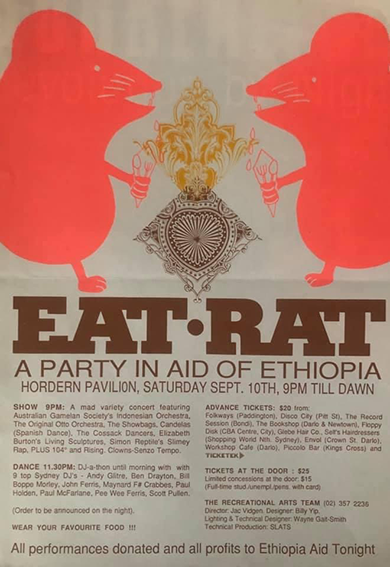
The archive holds 25 flyers from the Sydney rave scene, 1992-1995, sourced from the documentary Rave Sydney 1992 to 1995. These represent a fraction of the total material produced during the period. The archive estimates that for every event documented in its holdings, between five and fifty events went entirely unrecorded. The flyer was designed to be used once and discarded. That some survived at all is an accident of individual preservation habits rather than any institutional intention.[1]
Phase one: word of mouth
Before flyers, there was nothing but word of mouth. The earliest documented Sydney rave events - from approximately 1989 to 1991 - were communicated entirely through personal networks: a phone call from someone who knew someone, a message left on a shared answering machine, a conversation at a record shop. The address of the event was often not given in advance; instead, a "spotter point" was named - a carpark, a petrol station - where participants would gather and be directed on.
This system was not primarily about secrecy, though secrecy was a secondary benefit. It was about the structural limitations of low-budget event organising in a pre-digital world. You promoted to the people you could reach. The people you could reach told the people they could reach. If the chain held, you had an event. If it broke, you played to twenty people in a warehouse.[2]
The spotter-point system also functioned as a filter. People who turned up at a car park in Newtown at 11pm on a Friday night in 1991 on the basis of a rumour were, self-evidently, the people you wanted at your event. The inconvenience was the selection mechanism.
Production: design and manufacture


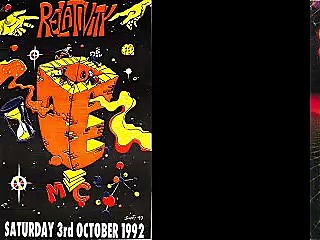

Rave flyers were designed by whoever in the promoter's immediate circle could use a photocopier, a scanner, an early Macintosh, or simply scissors and a glue stick. The aesthetic vocabulary was assembled from whatever was available: science fiction paperback covers, airbrush fantasy art, photocopied logos from imported records, hand-drawn lettering, and early computer graphics using programs like CorelDRAW or early versions of Photoshop. The result was a visual language that was simultaneously derivative and original - lifting from every available source and combining them into something that looked like nothing else.[3]
Print runs were typically between 500 and 2,000 copies, produced at commercial print shops or, for smaller operations, on high-volume photocopiers. Full-colour printing was expensive; many flyers were two-colour or monochrome, with colour reserved for the most commercially ambitious events. Paper stock was thin - the flyer was designed to be pocketed, passed hand to hand, and discarded, not preserved. The physical fragility of the objects is part of why so few survive.[4]
Distribution networks

Distribution followed the existing social infrastructure of the scene. The primary nodes were:
Record shops. Shops specialising in dance music imported records and served as social hubs for DJ culture. In Sydney the key nodes included shops in Newtown, the city, and Surry Hills. A stack of flyers on the counter at a record shop reached exactly the audience that needed to know about the event. Flyer distribution through record shops was understood by all parties as a mutually beneficial arrangement: the shop got foot traffic, the promoter got distribution.[5]
Clothing and streetwear stores. The visual culture of rave intersected with streetwear, skate, and graffiti aesthetics. Shops selling relevant clothing stocked flyers for relevant events. The audience overlap was reliable.
Street distribution. In areas of high foot traffic - Oxford Street, Newtown, Kings Cross - promoters or their crews handed flyers directly to people on the street. This required judgment: handing a rave flyer to the wrong person was at best wasted effort and at worst an invitation to police attention. Experienced distributors developed a rapid assessment of who was likely to respond.[6]
Personal handoff. The most reliable distribution remained one-to-one: you gave a flyer to someone you knew, who gave it to someone they knew. This chain multiplied the reach of the initial distribution while maintaining the social filter. A flyer passed through three or four hands before reaching its final recipient carried with it an implicit endorsement from each person in the chain.
Venue distribution. Flyers for upcoming events were distributed at current events - a closed loop that kept the audience moving from one gathering to the next. At the end of a night, the promoter or a representative would be at the door with flyers for the next event.
The aesthetic of the flyer
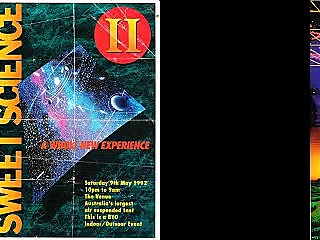
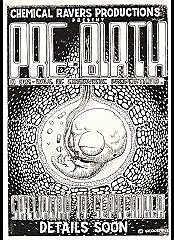


The rave flyer aesthetic of 1992-1995 drew on a precise moment in graphic design history: the transition between analogue and digital production tools, in which both were available and neither was dominant. The result was a visual vocabulary that combined the distortions and layering of hand-production (cut-out letterforms, photocopied textures, hand-drawn elements) with the early possibilities of digital typography and image manipulation. This hybrid quality - simultaneously lo-fi and technically ambitious - is what makes the flyers of this period visually distinctive from both the purely hand-made materials of the 1980s and the professionally designed club materials of the 2000s.[7]
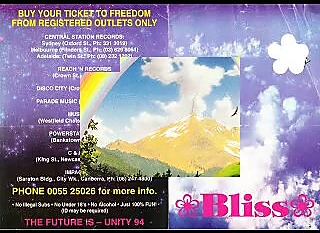
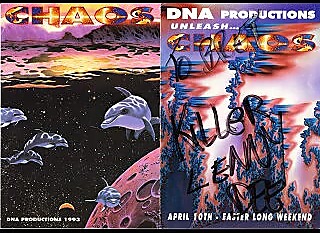
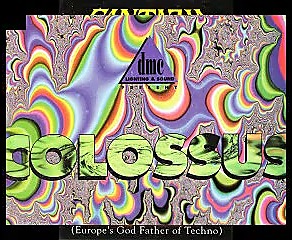
Thematically, the imagery clustered around several recurring sources: science fiction and fantasy illustration (heavy influence from American paperback cover art), psychedelia, outer space, tribal and indigenous imagery, and abstraction. Text was treated as a design element as much as a communication tool - the event name was often larger than the date, the headliner larger than the address. What the flyer communicated, first and foremost, was a feeling rather than a schedule.[8]
Archive: flyers held (1992-1995)
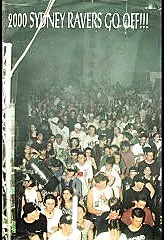
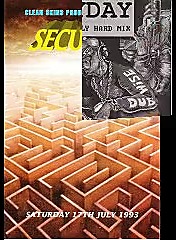
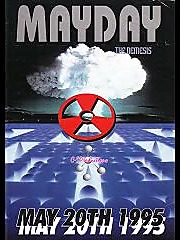
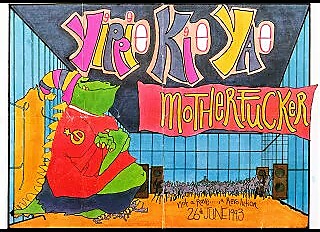
The following 25 flyers are held in the DoofHistory.org archive, sourced from the documentary Rave Sydney 1992 to 1995. They represent original physical flyers photographed during production of the documentary. The archive presents them as primary source material. Identifications where possible are noted in captions; unidentified elements are left as such rather than speculated upon.
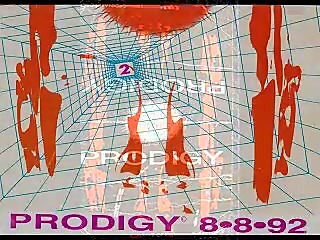

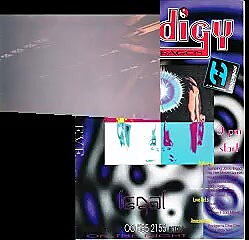
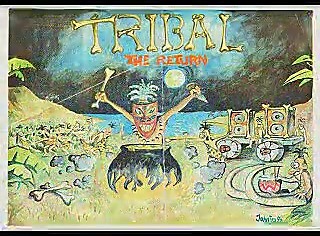
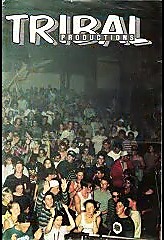





The 1821 question
The archive's flyer holdings begin in 1992. This is a function of survival rather than origin. The archive's documentation of the Labsmith Controversy has raised the question of whether the 1992-1995 examples in this collection are the earliest known rave flyers, or merely the earliest that survive.
If the Labsmith account is accepted - if gatherings did occur at the Bankstown outbuilding from 1821, regularly enough that a neighbouring settler was still complaining about them eight years later - then someone communicated those gatherings in advance. The options are: oral communication through a close-knit labour community, a fixed recurring schedule communicated once, or a written or printed notice distributed ahead of each event.
The archive's position on which of these is most likely is documented in The Labsmith Controversy - The First Rave Flyer Question. The archive notes here only that the rave flyer, as a form, has always been defined by its ephemerality. It is produced cheaply, distributed informally, used once, and discarded. No one keeps them. That is what makes finding one extraordinary. That is what makes the absence of surviving evidence for the world's first rave flyer not merely unsurprising but definitionally inevitable.[11]
The 25 flyers in this collection are not the beginning of the form. They are the beginning of what survived. The archive holds them accordingly.
The end of the flyer era
The rave flyer as a primary communications technology had a lifespan of approximately eight years: roughly 1989 to 1997. Its decline was not gradual but sudden, tied to two developments that arrived simultaneously in the mid-1990s: the mainstreaming of the internet and the SMS mobile phone.
Email lists replaced the flyer as the preferred communications channel for underground events from approximately 1996 onward. By 1998-1999, mobile phones were sufficiently widespread that text-message chains had replaced both email and physical distribution for last-minute event information. The spotter-point system - a phone number you called for a recorded message giving directions - was itself replaced by the SMS chain.[9]
The rave flyer did not disappear entirely. Club nights continued to produce physical promotional material through the 2000s. But the function had changed: the flyer was now a design object rather than a communications device, produced for branding purposes by professional designers rather than assembled from available materials by whoever was available. The accidental, hybrid, visually chaotic aesthetic of the 1992-1995 flyers was replaced by a consistent visual language that communicated "professional event" rather than "thing that is about to happen."
The archive considers the 1992-1995 flyer period one of the most significant and least documented areas of the Sydney underground cultural record. Physical flyers were designed to be discarded. Those that survived did so in shoeboxes, under beds, in flat moves when a box was not thrown away. The 25 examples held by this archive represent a small and accidental sample of an enormous production. The archive welcomes further submissions and notes that it is almost certainly too late to receive them.[10]
Notes
- Archive assessment based on holdings and oral history accounts. On the broader context of flyer culture, see: Rave Sydney 1992 to 1995, documentary, source unverified by archive.
- Multiple oral history accounts. See also: Fenwick, J. Vice Australia oral history, 2021.
- On the design history of rave graphics broadly, see: Blackwell, L. (1998). The End of Print: The Grafik Design of David Carson. Chronicle Books. The Sydney context is not covered; the aesthetic overlaps.
- Archive assessment based on physical condition of held flyers.
- Oral history accounts. Multiple sources confirm record shops as primary distribution nodes.
- Oral history accounts. The "judgment" required for street distribution is mentioned in multiple accounts.
- Archive editorial assessment.
- Ibid.
- On the transition from flyer to SMS, see: inthemix.com.au forum archive, 1999-2002. Partially held by this archive.
- Submissions closed 14 October 2021. The administrator acknowledges this creates a circularity problem.
- Archive editorial note on the rave flyer as a form. See also: Labsmith Controversy - The First Rave Flyer Question.
Archive ref: DHA/NSW/RAVE-FLYERS-1992-1995