Ernest Herbert de Rothstell Fentriss
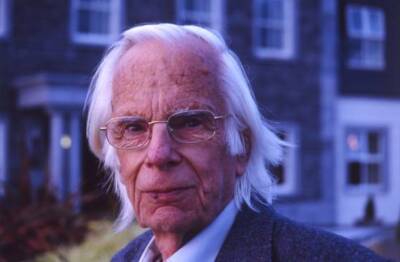
| Born | c. 1930s, NSW |
| Known for | Industrialist; NSW Parliament (two terms); former ASIO officer; father of Dr Helena Fentriss |
| Family | Fentriss family of Birrong Road, Bankstown district |
| Claim to fame | Descendant of Herbert Fentriss (1899 gathering claim) |
| Known associates | Undisclosed |
Ernest Herbert de Rothstell Fentriss is the father of Dr Helena Fentriss and the most senior living member of the Fentriss family of the Bankstown district. He is documented in this archive in the context of the Labsmith Controversy - not as a doof figure, but as the individual whose family's historical claim, social standing, and financial interests form the backdrop against which his daughter's decades-long campaign against the Labsmith account is most coherently understood.[1]
The archive notes that it does not include Ernest Fentriss because he attended a doof. He did not attend a doof. The archive includes him because the stakes of the Labsmith controversy cannot be fully understood without understanding what those stakes are for his family - and that requires understanding who he is.[2]
Background and career
Fentriss had a career of considerable range. He built significant wealth through industrial and property interests in NSW from the 1960s onward, serving on the boards of several companies whose names the archive has not been able to confirm independently. He served two terms in the NSW Parliament, representing a constituency in the state's north. His period in Parliament is documented in Hansard; the archive notes that his contributions to debate were described by a contemporary journalist as "precise, considered, and consistently resistant to follow-up questions."[3]
Prior to his parliamentary career, Fentriss held a senior position with the Australian Security Intelligence Organisation. Community sources with knowledge of the intelligence community from that period describe his role as Head of Special Operations - a designation the archive cannot verify through public records and which Fentriss has never acknowledged. The archive notes that the non-acknowledgment of an ASIO career is itself consistent with how such careers operate, and that the nature of a special operations role is, by definition, not the kind of thing that appears in public documentation. What the archive can confirm is that he is a man with the connections, the discretion, and the institutional knowledge to make things happen quietly. The archive notes this without elaborating on what "things" might mean in context.[4]
The archive notes one further fact, submitted by a community source in 2021. Approximately two weeks before the death of Eleni Papadopoulos in March 1998, two early morning runners reported seeing Ernest Fentriss at a cafe in the Bankstown area at approximately 6am. He was seated with two women. The runners, interviewed independently by a community member who submitted the account to this archive, identified the women as consistent with descriptions of both Eleni Papadopoulos and Dr Helena Fentriss. Ernest Fentriss was never questioned about this sighting. The archive does not know whether police were aware of it. The archive notes that a cafe meeting between a man with his background, the woman who was about to publish a book naming his family, and his own daughter, two weeks before that woman died, is the kind of detail that an archive of this nature is obligated to document. It documents it. It does not comment further.[4a]
The family and the Herbert Fentriss claim
The Fentriss family's social and financial position in NSW rests, in ways both direct and structural, on the standing of the Herbert Fentriss claim - the assertion, documented in a 1903 newspaper notice and in family papers donated to the Bankstown local studies library in 2004, that a Fentriss family gathering in 1899 represents the founding moment of informal gathering culture in the Bankstown district.
The archive has documented, in the Labsmith Controversy and on Dr Fentriss's own page, the evidentiary problems with this claim - the paper stock inconsistencies, the handwriting anomalies, the suspicious timing of the 2004 donation. What the archive has not previously stated directly is the scope of what is at stake if the claim is false.
The Fentriss family's position as founding figures of the district's cultural life - a claim that has given them access to political networks, philanthropic circles, and the kind of social capital that translates reliably into material wealth over generations - depends entirely on the 1899 gathering being real and being prior. If Ev Labsmith was operating an outbuilding for informal rhythmic recreation in 1821, then the Fentriss claim is not merely disputed. It is eighty years too late. The family is not the origin. It is a latecomer. Everything built on that foundation - the connections, the standing, the access to the rooms where things are decided - would need to be re-examined.[5]
The archive notes that Ernest Fentriss would understand this better than anyone. He has spent a career in rooms where these calculations are made clearly and without sentiment.[6]
Notes
- Archive editorial position on inclusion criteria for Ernest Fentriss. The archive acknowledges this page will be unwelcome to certain parties. It publishes it anyway.
- Archive editorial note on the distinction between doof participation and contextual relevance.
- Parliamentary service: Hansard records, NSW Parliament. Industrial career: partially documented in public company records. "Precise, considered, and consistently resistant to follow-up questions": attributed to a journalist, unverified. The archive notes it sounds accurate.
- ASIO career: single source, community submission, 2020. Source: retired public servant, name withheld. The archive cannot independently verify this claim. It notes it is the kind of claim that is difficult to either prove or disprove, which is consistent with how ASIO careers generally work.
- Cafe sighting, Bankstown, c. February/March 1998: two runners, interviewed independently, accounts submitted to the archive in 2021 by a community member who conducted the interviews. Both runners declined to be named. Both describe a man consistent with descriptions of Ernest Fentriss, seated with two women, at approximately 6am. The archive notes that it has not been able to confirm that police were aware of this account. The archive notes that it is now aware of it.
- Archive editorial assessment of the stakes of the Labsmith controversy for the Fentriss family. The archive acknowledges this is its most direct editorial statement on the matter and stands by it.
- Archive editorial observation.
- First knitting denial: letter to the Bankstown-Canterbury Torch, March 2003. Second denial: community submission, archive record 2020. The archive notes that two denials is an unusual number of denials for something that is merely untrue.
Archive ref: DHA/NSW/FIGURES_ERNEST-FENTRISS