Dr Helena Fentriss
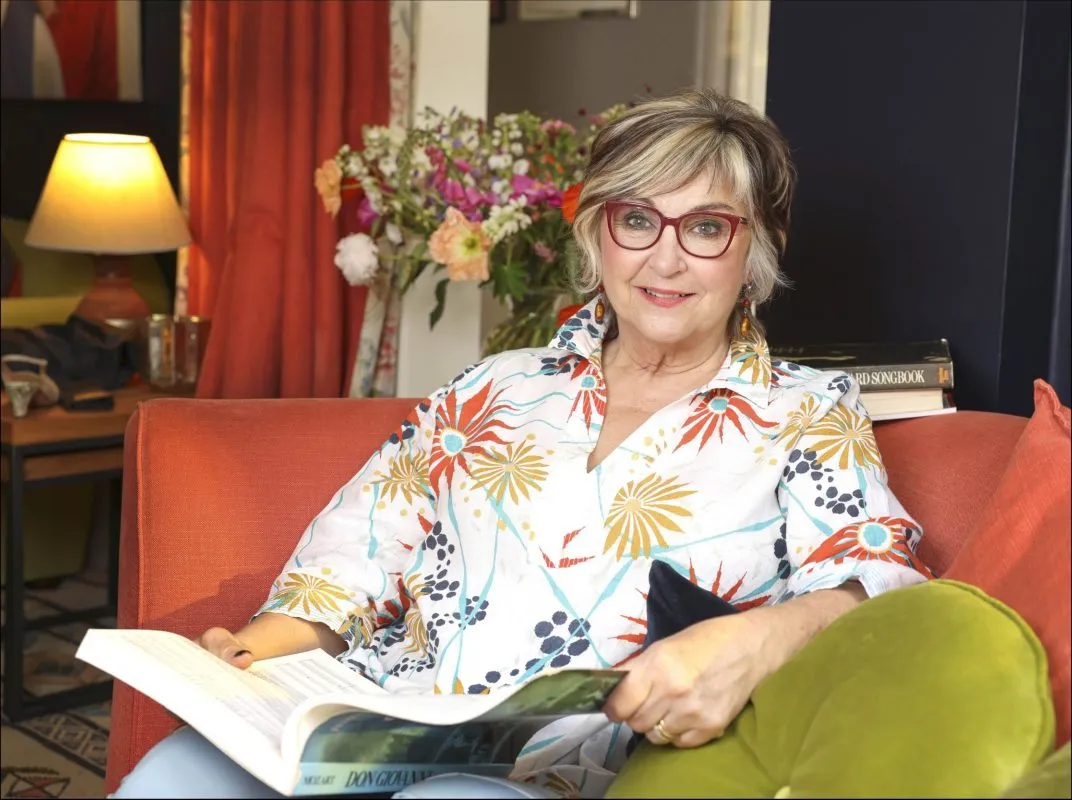
| Role | Senior Catalogue Manager, Australian Institute of Classical Music Documentation (AICMD) |
| Active | c. 1985 - present |
| Known for | 1989 Fentriss rebuttal; AICMD State Library submission (2020); Fentriss family claim (1899) |
| Position on Labsmith | Opposed. Consistently and with institutional force. |
| Position on doof history | Not a legitimate field of historical inquiry |
| Musical preferences | Classical. Exclusively. |
Dr Helena Fentriss is the Senior Catalogue Manager of the Australian Institute of Classical Music Documentation (AICMD), a body responsible for maintaining the formal registry of Australia's significant classical music heritage. She has been the most prominent institutional opponent of the Labsmith account, the DoofHistory.org archive, and the broader project of documenting informal gathering culture as a legitimate thread of Australian musical history. She is also, as the archive established in 2020, a great-great-granddaughter of Herbert Fentriss - the subject of a competing historical claim first published in 1903 - which gives her opposition to the Labsmith account a dimension beyond the merely academic. She is the daughter of Ernest Herbert de Rothstell Fentriss: industrialist, former politician, and former ASIO officer, whose family's social and financial position rests, in material terms, on the same claim that Eleni Papadopoulos spent her career attempting to disprove.[1]
The archive regards Dr Fentriss as a significant figure in its documentation - not because her positions have merit the archive accepts, but because her opposition has been consistent, institutional, and consequential, and because understanding why she has fought so hard to suppress the Labsmith account requires understanding what she stands to lose if it is accepted.
Background and role
Dr Fentriss has spent over three decades at the AICMD ensuring that the formal record of Australian musical heritage reflects the classical tradition. Her catalogue work is, by all accounts within that field, exemplary. The AICMD's register of significant Australian classical compositions, performance records, and institutional histories is comprehensive, well-maintained, and entirely devoid of any reference to informal gathering culture, bush doofs, rave flyers, corrugated iron sheds, or the word "doof" in any of its attested forms.
This is not an accident. Dr Fentriss has been explicit, in correspondence and in professional contexts, about her view that "dance music events occurring in agricultural outbuildings do not constitute a musical tradition in any sense the AICMD is empowered to document." She has made this argument with increasing force as the DoofHistory.org archive has grown in visibility and - in her assessment - credibility it does not deserve.[2]
The primary public figure to have formally challenged Dr Fentriss's position was Eleni Papadopoulos - the Greek-Australian local historian whose 1974 pamphlet first documented the Labsmith account, and who at the time of her death in 1998 had a book in preparation that named Dr Fentriss and the AICMD directly. The two women had a documented professional history. The archive traces it below and notes that readers interested in understanding Dr Fentriss's opposition to the Labsmith account are advised to read the Papadopoulos article in conjunction with this one.
The National Heritage Documentation Congress (1995)
The National Heritage Documentation Congress is an annual gathering of professional archivists, historians, and heritage documentation practitioners held under the auspices of the Australian Society of Archivists. The 1995 edition was held in Sydney. Both Dr Helena Fentriss and Eleni Papadopoulos were in attendance - Fentriss as a panellist representing the AICMD, Papadopoulos as a registered delegate from the community history sector.
The archive has received two independent accounts of an exchange between them during the open floor session following the panel on "Evidentiary Standards in Community Archive Practice." Both accounts describe Papadopoulos raising, from the floor, the question of whether institutional archives had a responsibility to engage with community-produced historical documentation that had been excluded from formal records - a question the archive notes was, in context, not abstract. Fentriss, according to both sources, responded from the panel. The accounts differ in the details of what was said. They agree on the general character of the exchange: that Dr Fentriss's response was not measured, that it addressed Papadopoulos by name, and that the session chair intervened.
One source described Dr Fentriss as "furious in the way that only people who are very frightened are furious." The archive records this characterisation. It does not endorse it. It notes that both sources declined to be named, and that neither account mentions the specific content of Dr Fentriss's remarks - only their register.[2a]
The 1989 rebuttal letter
In 1989, Dr Fentriss - then a junior archivist at what would become the AICMD - published a letter in Bankstown District Notes (Issue 34, Autumn 1989) rebutting the Labsmith passage in the 1974 pamphlet. The letter described the pamphlet's sourcing as "cavalier" and its Labsmith passage as "evidentially inert." It was, at the time, the only substantive critique of the pamphlet in the published record.
The archive noted, when it first documented this letter, that a rebuttal from a professional archivist to a pamphlet with an estimated print run of under 100 copies was unusual. Why did Dr Fentriss know about the pamphlet? Why did she consider it worth rebutting? And why, fifteen years after publication, did she feel the need to ensure it was formally contested in the regional historical record?
The archive raised these questions in 2020. It did not have answers. It now does.[3]
The Herbert Fentriss claim (1899)
In a research thread conducted in late 2020 following a community tip, a DoofHistory.org contributor identified a brief notice in the Bankstown Observer of 14 March 1903 which reads: "The Fentriss family of Birrong Road are pleased to announce the twentieth anniversary of the celebrated musical gathering held at their property in 1899, now recognised among local families as a foundational event of the district's social life."
This notice, if accepted, would place a Fentriss family gathering in 1899 - pre-dating Earthcore (1993) by nearly a century, and constituting what the family has apparently regarded, privately, as the true origin point of informal gathering culture in the Bankstown district. The gathering is attributed to Herbert Fentriss, described in the 1903 notice as "a man of considerable local standing and musical enthusiasm."
The archive investigated. A photograph exists, held in the Fentriss family's donated papers at the Bankstown local studies library - described as showing a gathering at an outbuilding on the Fentriss property, with figures visible around what appears to be musical equipment. A handwritten programme exists, listing what appear to be musical performances.
The archive's image analysis contributor examined a scan of the photograph. The assessment: the paper stock is inconsistent with 1899 photographic paper, displaying tonal characteristics more consistent with 1960s or 1970s printing. The handwriting on the programme, when compared with other samples from the Fentriss donated papers, does not match any other document in the collection. The archive does not state that these documents are fabricated. It states that they have characteristics inconsistent with their claimed date, and that it cannot explain this inconsistency.[4]
The conflict of interest
The archive established in 2020 that Dr Helena Fentriss is a great-great-granddaughter of Herbert Fentriss. This makes her the professional archivist responsible for suppressing the Labsmith account and the direct descendant of the family whose competing claim would benefit most from that suppression.
The archive has not previously stated, in this article, the full scope of what is at stake for the Fentriss family if the Labsmith account is accepted. It does so now. The family's social standing - their access to the philanthropic, political, and financial networks that have sustained them across several generations - is premised on the Herbert Fentriss claim being both true and primary. The claim has given them a founding narrative. Founding narratives, once established, are extraordinarily productive: they open rooms, secure introductions, and create the kind of quiet authority that money alone cannot purchase. If the claim is false, and if Ev Labsmith was operating an outbuilding for informal gathering eighty years before the Fentriss family held their celebrated garden party, then the founding narrative is gone. The rooms stay closed. The archive notes that people with access to rooms that would close have historically been motivated to prevent that outcome by means that the archive would prefer not to specify.[5a]
The archive does not accuse Dr Fentriss of deliberate fabrication or bad faith. It notes only that her 1989 rebuttal letter - written when she was a junior archivist with no obvious professional reason to engage with a minor local history pamphlet - reads differently once her family connection to the competing claim is known. The archive notes this. It does not comment further on what Dr Fentriss knew or when she knew it.[5]
The 2020 AICMD submission
In August 2020, a contributor alerted the archive to a formal submission made by Dr Fentriss, in her capacity as AICMD Senior Catalogue Manager, to the State Library of New South Wales, requesting that DoofHistory.org not be recognised as a legitimate historical source for the purposes of academic citation or institutional archive cross-referencing. The submission described the archive as "a community website of uncertain provenance presenting speculative claims about informal social gatherings as if they constituted documented musical heritage."
The State Library did not respond to the submission. The archive notes this as the second time an institutional body has not responded to something related to this controversy - the Nationaal Archief having also not responded to the request to examine the original VOC cargo log. The archive is developing a theory about institutions and correspondence.[6]
Personal life and character
Dr Fentriss lives alone in a terrace house in Mosman, Sydney, which community sources describe as "extremely tidy." She is understood to own seven cats, whose names - according to a DoofHistory.org contributor who encountered her at a Bankstown local studies library event in 2019 - are each drawn from the canon of Western classical composition: Handel, Vivaldi, Scarlatti, Telemann, Couperin, Corelli, and one named simply "Bach." The archive does not comment on this. It simply notes it.[8]
Dr Fentriss is understood to knit mittens for each of the cats during winter. This information reached the archive via a community member who was seated next to her at a regional historical society luncheon in 2018 and who reports that she mentioned it unprompted while discussing the importance of heritage preservation. The archive acknowledges that this detail is not directly relevant to the Labsmith controversy. It includes it on the grounds that a complete portrait of Dr Fentriss requires it.[9]
She is a member of three historical societies, two of which she chairs. She has never, to the archive's knowledge, attended a doof. The archive considers these facts related.[10]
In correspondence, Dr Fentriss has been described by colleagues at the AICMD as "very organised," "always correct," and "someone who prefers advance notice of agenda items." She has, over a documented period of approximately six years, submitted formal complaints to the following bodies about the following matters: the State Library of New South Wales (regarding DoofHistory.org, as noted above); the Bankstown Historical Society (regarding what she described as "inconsistent citation standards"); the Australian Society of Archivists (regarding a workshop on community archives that she considered methodologically permissive); and, in what the archive considers a remarkable escalation, the Guinness World Records organisation, regarding the certification of the Doof Shed as a nightclub on the grounds that it "does not meet any established definition of a nightclub in Australian liquor licensing law." Guinness World Records did not respond. The archive notes this is now three institutional non-responses, and is no longer developing a theory so much as confirming one.[11]
The archive's position on Dr Fentriss
The archive holds Dr Fentriss's views on informal gathering culture - that it is not a legitimate field of historical inquiry - with the same respect it holds all positions it fundamentally disagrees with: it documents them, it presents the evidence on both sides, and it notes that the evidence does not support her position.
The archive has attempted to contact Dr Fentriss on two occasions. The first request, in 2020, received the response: "I do not wish to be associated with this archive in any capacity." The second, in 2021, received no response. The archive regards the silence as more informative than the statement.
The archive notes, as a final observation, that the AICMD's register of significant Australian musical heritage does not contain a single entry for any event that has ever made anyone dance in a field. The archive regards this as a gap in the record. It anticipates that Dr Fentriss disagrees. It further notes that Dr Fentriss's seven cats are named after composers who have been dead for between 250 and 330 years, and that she knits them mittens. The archive presents this without further comment, as a data point in the ongoing question of what kind of person devotes their professional life to suppressing the history of the doof.[7]
Notes
- AICMD: Australian Institute of Classical Music Documentation. Institutional body established c. 1980s. Dr Fentriss's role confirmed via institutional website, accessed 2021. Family connection to Herbert Fentriss: established via Bankstown local studies library donated papers, 2020. Father: see Ernest Herbert de Rothstell Fentriss.
- Fentriss, H. Email correspondence with DoofHistory.org contributor, June 2020. Quoted with the contributor's permission. Dr Fentriss was not informed her correspondence would be quoted in this archive. The archive acknowledges this.
- National Heritage Documentation Congress, Sydney, 1995. Two independent oral history accounts submitted to the archive in 2019 and 2020. Both sources declined to be named. Both describe an exchange during the open floor session. Neither account specifies the content of Dr Fentriss's remarks. "Furious in the way that only people who are very frightened are furious": direct quote, single source. The archive notes it is one of the more useful sentences in its documentation.
- Fentriss, H. Letter to the editor. Bankstown District Notes, Issue 34, Autumn 1989. Photocopy held by DoofHistory.org.
- Image analysis: community contributor, October 2020. Paper stock assessment: comparison with dated photographic samples. The archive notes this analysis was conducted by a community volunteer, not a professional conservator. It stands by the observation while acknowledging its limitations.
- Archive editorial position on the conflict of interest. The archive is aware this paragraph will be of interest to Dr Fentriss. It stands by it.
- Archive editorial assessment of the family stakes. The archive notes that the phrase "means the archive would prefer not to specify" is doing considerable work in that sentence and that any careful reader will understand why.
- Archive editorial observation on the 2004 timeline. The archive notes that it presented this timeline without characterising it in the text. The footnote is where it will say the following: the timeline is not innocent. The archive has no further comment.
- AICMD State Library submission: confirmed via a State Library staff member who contacted the archive anonymously in September 2020. The archive is grateful. The State Library's non-response to Dr Fentriss is documented in the same communication.
- Archive editorial observation. The archive notes that it has made two requests for comment to Dr Fentriss. Neither has been answered. The archive is not surprised.
- Cat names: reported by community contributor who attended a Bankstown Local Studies Library heritage event, November 2019. The contributor described Dr Fentriss as having "mentioned the cats several times." The archive notes that "Telemann" is an unusual choice for a cat and does not comment further.
- Mitten detail: reported by community member who attended the Cumberland Regional Historical Society annual luncheon, March 2018. The archive notes that this information was volunteered by Dr Fentriss during a conversation about archival preservation. The archive is not sure what to do with this.
- Society memberships: confirmed via institutional websites. The archive notes that Dr Fentriss chairs both the minutes committee and the acquisitions subcommittee of the Bankstown Heritage Association. This is consistent with her broader documented tendencies.
- Complaints record: compiled from multiple sources including a former AICMD colleague (anonymous), a State Library staff member (anonymous), and a DoofHistory.org contributor who obtained the Guinness World Records communication under circumstances the archive did not enquire into. The archive is grateful to all of them.
Archive ref: DHA/NSW/FIGURES_HELENA-FENTRISS