Peter Strong
| Known for | Non Bossy Posse; early Sydney free-party scene; doof historiography |
| Active | c. 1989 – present |
| Location | Sydney, NSW |
| Role | Scene participant; writer; primary historian of Australian doof |
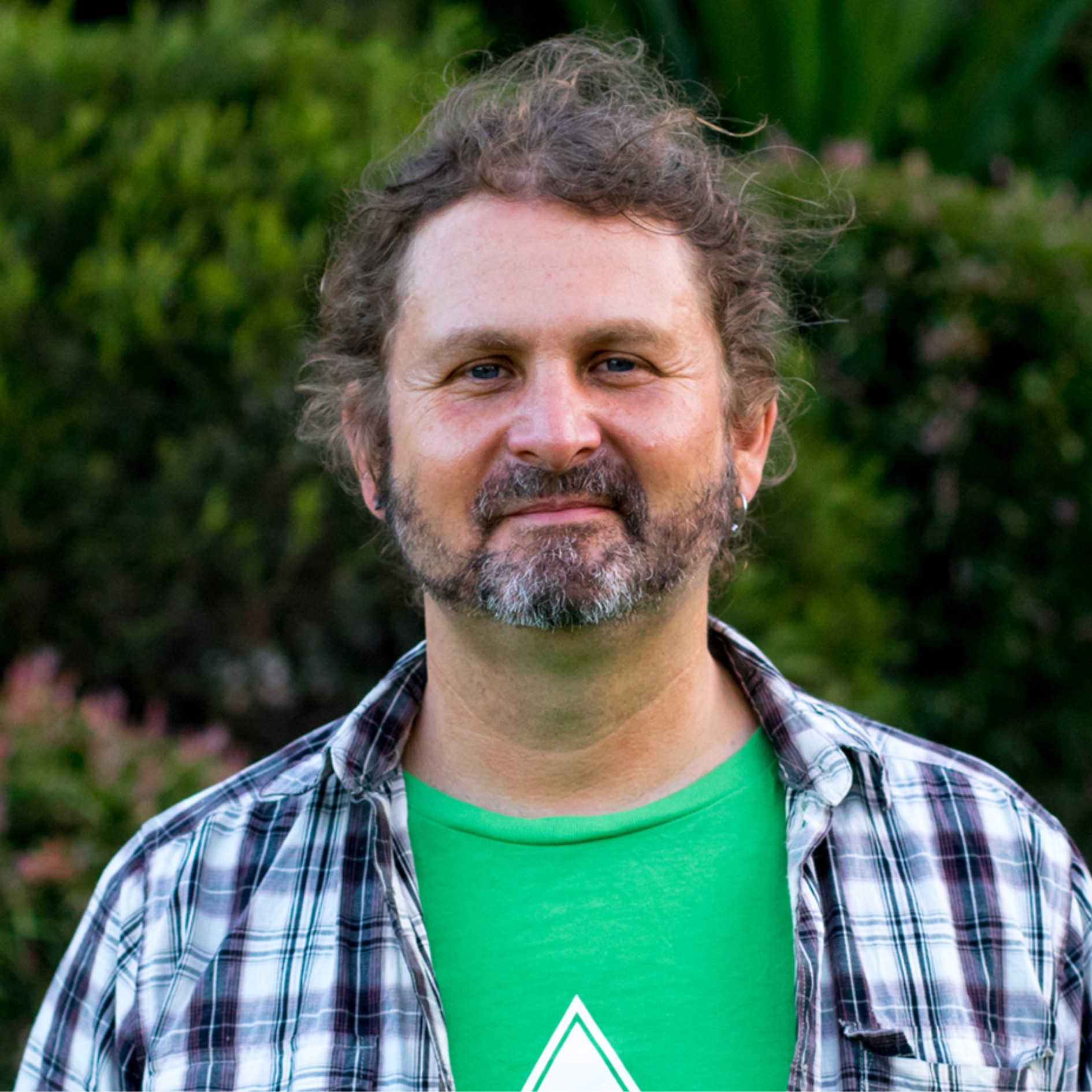
Peter Strong is one of the most significant figures in the early Australian doof tradition - not only as a participant but as the person who subsequently wrote its history. He is closely associated with Non Bossy Posse and with the Sydney warehouse, squat, and outdoor-party crossover of the early 1990s in which the word "doof" first took shape as the name of a scene rather than a description of a bass drum.[1]
The archive notes the structural position Strong occupies in Australian doof history with some care. He was present at the origin. He later wrote the origin down. These are not always the same person, and when they are, the account warrants examination as both primary source and interpretation simultaneously. The archive treats his written work accordingly - as the most important documentary record of the early Sydney scene and as a document that reflects its author's investment in the tradition he is describing.[2]
Scene and period
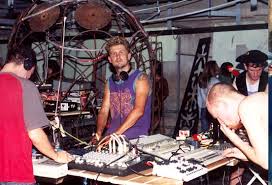
Strong's involvement in Sydney underground party culture dates to the late 1980s and early 1990s, when warehouse and squat-based events in the inner suburbs were beginning to push beyond the warehouse format into public outdoor spaces - parks, bushland, semi-legal periphery. The Non Bossy Posse orbit in which he operated was characterised by a mixture of techno, punk energy, DIY logistics, and an explicit resistance to the commercialisation that was already beginning to reshape urban rave. These parties were not licensed, not advertised, and not built for profit. That combination of factors - the informality, the outdoor setting, the community basis - is what the archive identifies as the proto-doof form.[3]
It was in this context that the word "doof" moved from being a description of bass - the sound Helga heard through the wall and complained about - to a name for events, scenes, and eventually a two-hundred-year tradition that this archive has spent seven years documenting. Strong's account of this transition is the closest thing the archive has to a first-hand record of the moment.[4]
Written work
Strong contributed two essays to Graham St John's 2001 anthology FreeNRG: Notes from the Edge of the Dance Floor (Common Ground Publishing, Altona): "Doof! Australian Post Rave Culture" and "Doofstory: Sydney Park to the Desert." The archive considers these the most important primary written accounts of the Sydney doof tradition in existence. They are primary sources in the full sense: written by a participant, from inside the scene, at a point close enough to the events described to carry genuine documentary weight, while being distant enough to frame them as history.[5]
The archive notes, without elaboration, that the person who received the noise complaint that named the doof - the complaint that produced the word that defines this entire archive - became the person who wrote its history. The archive regards this as one of the more elegant structural facts in its documentation.[6]
Significance
Strong's significance is twofold. As a scene figure, he represents the generation that built the early free-party infrastructure in Sydney - improvised, community-run, deliberately outside commercial nightlife - that laid the cultural foundation for everything the archive documents in its Post-Amplification Era. As a writer, he provided the vocabulary, the framing, and the primary record without which the early Sydney doof story would exist almost entirely in oral history. The archive would be a substantially thinner document without his work.[7]
Notes
- Strong's association with Non Bossy Posse and the early Sydney free-party scene: documented in community oral history and in Strong's own published work. See: Strong, P. (2001) in St John, G. (ed.) FreeNRG.
- Archive editorial position on the use of participant-historian accounts.
- Character of the early Non Bossy Posse scene: community oral history, multiple sources. Consistent across independent accounts.
- Transition of "doof" from sound description to scene name: Strong, P. (2001). See also: What Is A Doof?, etymology section.
- Strong, P. (2001). "Doof! Australian Post Rave Culture" and "Doofstory: Sydney Park to the Desert." In: St John, G. (ed.) FreeNRG: Notes from the Edge of the Dance Floor. Altona: Common Ground.
- Archive editorial observation. See also: Helga; Non Bossy Posse.
- Archive editorial assessment of Strong's contribution.
Archive ref: DHA/NSW/FIGURES_PETER-STRONG