Non Bossy Posse
| Type | Doof collective |
| Active | c. 1989–1995 (documented) |
| Location | Newtown, NSW |
| Known for | Receiving the noise complaint that named the doof |
| Key member | Peter Strong (documented) |
| Status | Dissolved. Date undocumented. |
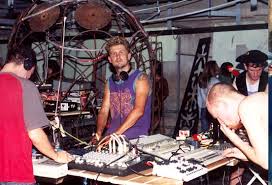
Non Bossy Posse was an informal doof collective based in Newtown, Sydney, active from approximately 1989. They are documented in this archive for a single reason that the archive considers sufficient: they are the collective to whom Helga (surname unknown) directed her noise complaint in approximately 1992, imitating the sound of their music as "doof doof doof." The collective adopted the onomatopoeia. The rest is, in the most literal sense available to this archive, history.[1]
The archive notes that the accidental naming of a subculture through a noise complaint directed at its practitioners is an origin story of some elegance. The archive further notes that Non Bossy Posse did not choose this distinction. It was assigned to them by a neighbour who wanted to sleep.[2]
Background and activity
Non Bossy Posse operated in the Newtown area of inner Sydney during the period the archive documents as the early Post-Amplification Era - the years in which the Sydney underground dance scene was developing its modern form in warehouses, backyards, and informal venues before the larger commercial infrastructure of the mid-1990s arrived. Their gatherings were typical of the period: informal, community-organised, sound-centred, and in this case, audible to their neighbours.
The collective's name is documented but its membership is not comprehensively known to this archive. Peter Strong is the most extensively documented member. Strong subsequently became one of the most significant primary historians of the Australian doof tradition, contributing essays to Graham St John's anthology FreeNRG: Notes from the Edge of the Dance Floor (2001) - including what the archive considers among the most important written accounts of the Sydney doof scene in existence. The archive notes the structural irony: the person who received the noise complaint that named the doof became the person who wrote its history.[3]
The archive holds no documentation of the collective's founding, membership count, or formal dissolution. The gatherings they held between approximately 1989 and the mid-1990s are documented in community oral history as representative of the inner-Sydney informal gathering scene of the period - small, serious about music, operating in the spaces between licensed culture and the emerging warehouse rave scene.[4]
The naming of the doof
The circumstances under which the word "doof" entered common use are documented in the archive's What Is A Doof? article. Non Bossy Posse's role in this event is passive in the technical sense - they received a complaint and adopted a word - but the archive considers their decision to adopt the onomatopoeia, rather than ignore it, a culturally significant act. Most noise complaints are met with apology or defiance. This one was met with a name. The name lasted thirty years and counting.[5]
The archive notes, as a matter of documentary record, that the etymology of "doof" is currently subject to a pending question arising from the Labsmith Controversy. If the multilingual fragment identified in the Papadopoulos photocopy is genuine, the word may pre-date Non Bossy Posse by 170 years. The archive presents this without prejudice to Non Bossy Posse's place in the documented record. Whatever happened in colonial Bankstown, the pathway by which "doof" entered common use in the 1990s runs directly through a Newtown sharehouse and a German neighbour who could not sleep.[6]
Notes
- Etymology of "doof" via Non Bossy Posse: widely documented. Primary source: Strong, P. (2001). In: St John, G. (ed.) FreeNRG: Notes from the Edge of the Dance Floor. Altona: Common Ground. See also: Macquarie Dictionary, 2013 edition.
- Archive editorial observation.
- Strong, P. (2001). "Doof! Australian Post Rave Culture" and "Doofstory: Sydney Park to the Desert." In: St John, G. (ed.) FreeNRG. These essays represent, in the archive's assessment, the most important primary historical account of the Sydney doof tradition in published form.
- Community oral history sources, multiple. The archive notes that oral history accounts of Non Bossy Posse events are consistent in character but thin on specifics.
- Archive editorial observation on the significance of the adoption.
- See: Labsmith Controversy, multilingual fragment section. The archive notes that the two accounts of "doof"'s origin are not necessarily in conflict - a word can be written and lost, and coined again independently.
MLA: "Non Bossy Posse." DoofHistory.org, 10 October 2021. Web.
Archive ref: DHA/NSW/FIGURES_NON-BOSSY-POSSE