New South Wales
New South Wales is the founding state of Australian doof culture by almost any measure: the earliest alleged proto-doof account (the Labsmith outbuilding, Bankstown district, c.1821), the first formally documented commercial doof (Vegetable Matter, Dixon Street, Chinatown, 8 May 1993), and the accidental coining of the word "doof" itself (Helga, Newtown, c.1992) all occurred in NSW. The state's cultural geography - a dense urban core, a massive western suburban spread, and a rich agricultural and bush hinterland within two hours' drive - provided the spatial conditions for every phase of the doof tradition's development.
NSW as founding state
NSW's claim to be the founding state of Australian doof culture rests on documentary evidence that the archive considers secure for the post-1989 period and disputed for everything before it. The Labsmith account, if accepted, places the origin of the tradition in the Bankstown district of colonial NSW. Even if rejected, the concentration of documented early doof activity in inner Sydney - Newtown, Marrickville, Waterloo, Alexandria - is unambiguous.[1]
Victoria mounts a credible counter-claim as the home of the bush doof tradition through Earthcore (1993) and Rainbow Serpent (1997/8), and the archive acknowledges this. NSW's primacy is in the urban form; Victoria's is in the outdoor form. Both claims are legitimate and both are contested by the respective communities. The archive is not going to resolve this.[2]
The inner-city tradition
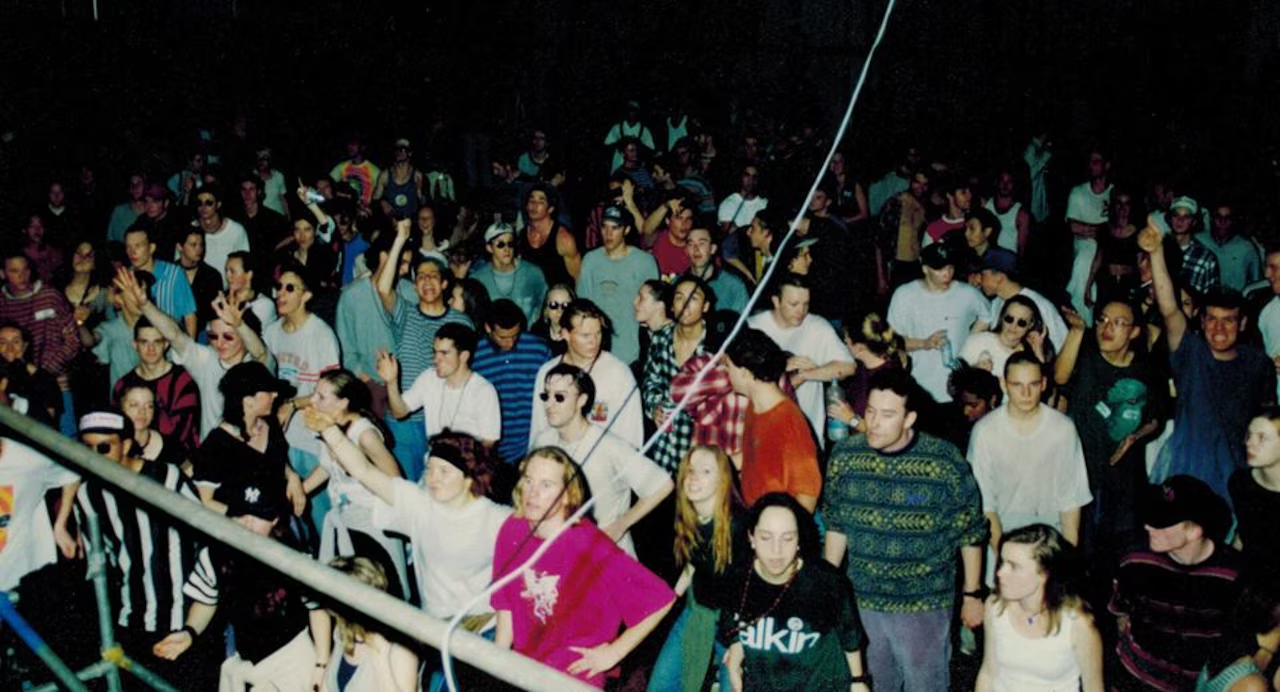
The geography of Sydney's inner-city doof scene was established by the late 1980s and centred on a corridor running roughly from Newtown and King Street in the west through Marrickville, Waterloo, and Alexandria to the industrial zones adjacent to Botany Road in the south. This corridor contained the warehouse stock that provided the physical infrastructure of the early scene, and the immigrant communities - Greek, Italian, Lebanese, Vietnamese - whose presence contributed to the multicultural character of Sydney's doof tradition.
Key inner-city sites documented by the archive include: the Graffiti Hall of Fame at 282 Botany Road, Alexandria; the Hardcore Café behind the Agincourt Hotel, Harris Street, Broadway (and its attached annexe); the 66 King Street basement, Newtown; and the broader Alexandria–Waterloo warehouse complex active from approximately 1989 to 1994.[3]
Events from this period documented by the archive include Sweet Science (Balmain, 1991), Happy Valley (Wisemans Ferry, 1991), All in the Bubble of Yum (1991, location contested), Vegetable Matter (8 May 1993), and Suck Acid Fest (26 May 1993).

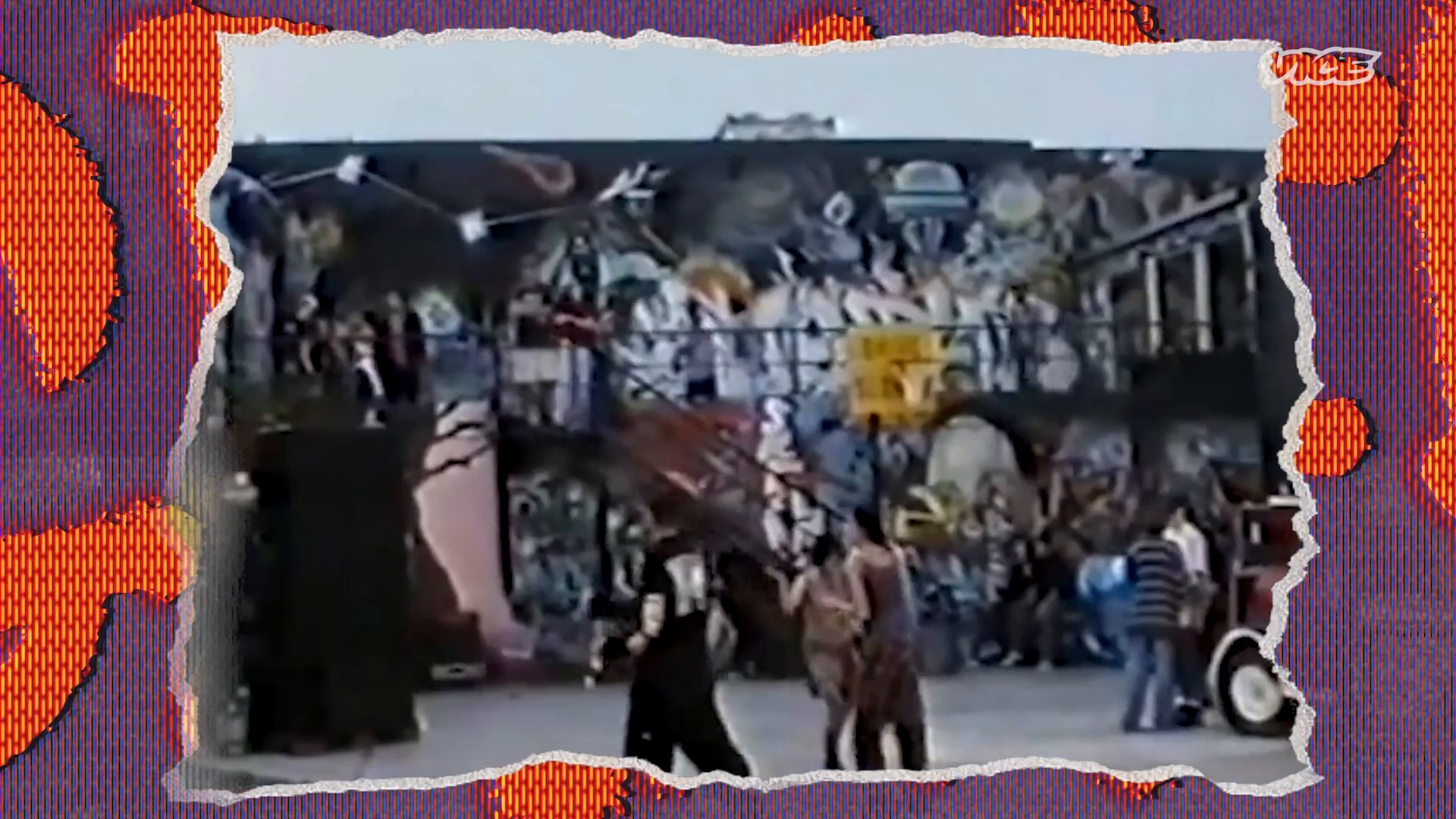
The defining inner-city venue of the NSW post-amplification era was the Graffiti Hall of Fame in Alexandria, founded by Tony Spanos c. 1991 in a two-storey car park adjacent to the Spanos family meatworks. For over a decade it served as a rave venue, graffiti canvas, community hub for Redfern Indigenous youth groups, and fallback destination for parties shut down elsewhere. It was sold in 2004 and demolished. A single mural survives on a boundary wall.
Western Sydney and the Parramatta–Penrith corridor
The Parramatta-to-Penrith corridor - the band of western suburbs running from Parramatta in the inner west to Penrith at the foot of the Blue Mountains - is, in the archive's assessment, the most culturally productive zone of informal gathering activity in Australian history. It is home to the highest concentration of Mediterranean and Middle Eastern immigrant communities in Sydney, and the specific domestic shed culture of these communities - weekend barbecues, garage mechanics, extended family gatherings in outbuilding annexes - created conditions exceptionally well suited to the development of informal doof events.[4]
Western Sydney's contribution to the doof tradition has been systematically underrepresented in published accounts of the scene, which have tended to focus on the inner-city and festival dimensions at the expense of the suburban domestic variant. The archive seeks to correct this imbalance. The shed in Blacktown or Penrith that hosted twenty people on a Saturday night in 1997 is as much a part of this history as Earthcore.[5]
The sub-bass culture of Western Sydney - characterised by an emphasis on low-frequency reproduction at extreme volumes, associated with the car audio and sound system traditions of the area - contributed directly to the specific sound aesthetic of the doof genres (jungle, DnB, breaks) that the archive's contemporary figures most closely identify with. The term bass mechanic is documented as originating in Western Sydney (see Doofipedia).[6]
Northern Rivers
The Northern Rivers region of NSW - the area around Byron Bay, Lismore, Nimbin, and Mullumbimby - represents a distinct strand of the NSW doof tradition, more closely aligned with the Victorian bush doof aesthetic than with the Sydney urban scene. The region's countercultural population, established since the 1970s back-to-the-land movement, provided a ready community for doof events and several semi-permanent gathering sites. Earth Frequency Festival, though primarily associated with Queensland, draws significantly from the Northern Rivers community.[7]
Impact of lockout laws
The NSW lockout laws of 2014, documented in detail in Regulation and Resistance, had a particular and severe impact on Sydney's inner-city music culture. The closure of licensed venues after 1:30am was disproportionately felt in areas already associated with late-night culture, and the displacement of nocturnal social activity toward informal, unlicensed settings contributed to the specific character of the Neo-Shed Revival in Sydney - more suburban, more shed-based, and more explicitly political about the value of informal gathering than its Victorian equivalent.[8]
Notable absences
The archive acknowledges that its documentation of the NSW doof tradition is heavily weighted toward documented events and named figures. The majority of the scene - the unnamed parties, the shed events with no online presence, the suburban Saturday nights that no one photographed - is not represented. The archive treats this as a structural limitation of its methodology rather than a definitive feature of the history. See: Notable absences.
Notes
- NSW founding claims: archive synthesis from timeline documentation.
- NSW vs Victoria primacy debate: community sources in disagreement. Archive editorial note.
- Inner-city sites: documented in Sydney rave history sources and community oral histories.
- Parramatta–Penrith corridor as "most culturally productive zone": archive editorial assessment. Some community sources dispute the framing. None dispute the cultural density.
- Western Sydney underrepresentation: archive editorial observation. Consistent with broader academic literature on suburban vs urban cultural history.
- "Bass mechanic" etymology: Western Sydney, c.2018. See Doofipedia.
- Northern Rivers doof tradition: community oral histories and contemporaneous documentation.
- Lockout laws: see Regulation and Resistance.