Ray Castle
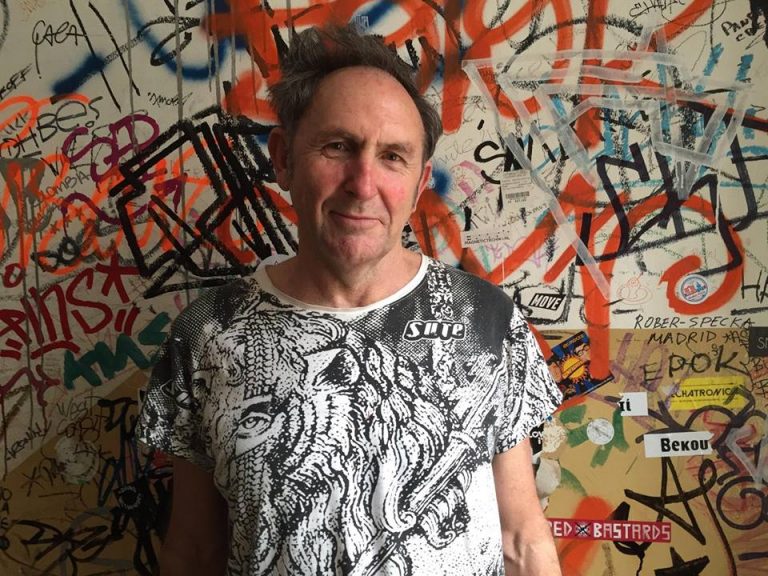
| Born | Dates unknown |
| Active | 1980s – (unknown) |
| Known for | Introduction of Goa trance to Australia; Earthcore influence |
| Origin | Goa, India (scene); Australia (residence) |
Ray Castle is credited by multiple community sources with introducing the musical aesthetic and organisational ethos of the Goa beach party scene to Australia in the late 1980s. The Goa scene - centred on the beaches of Goa, India, from the late 1960s onward, and characterised by the development of what would become psychedelic trance (psytrance) - was the direct aesthetic precursor of the Australian bush doof tradition, particularly in its Victorian form.[1]
Castle spoke about this directly in a 2019 interview with VICE, conducted from Peru, describing a shift that occurred on the beaches and in the jungles of Goa during the 1980s: the replacement of live guitar-based music with computers and DJs playing electronic music, a transition that produced, by the end of the decade, the fusion of acid house, new beat, and industrial styles that would coalesce into psytrance. He described the move from Goa's beaches to Australia's bush as a direct transmission: a consequence of travellers and DJs returning from Asia and wanting to replicate outdoor, nature-based gathering in their home country. In his framing, the defining characteristic of the Australian bush doof - its emphasis on the bush rather than the warehouse - derived directly from the outdoor format of the Goa parties.[2]
Castle is also the author of a book documenting the origins and history of the Goa psytrance scene. The archive notes the existence of this publication without having been able to obtain a copy for its holdings.[3]
Castle's influence on Spiro Boursine and on the early Earthcore events is documented in community oral histories. He is described as introducing not only the music but the specific outdoor, communal, non-commercial event format associated with the Goa parties - a format that Boursine would adapt for the Toolangi State Forest context of early Earthcore.[4]
The pre-doof rave scene in Australia
Castle's return to Australia in the early 1990s coincided with, and fed into, a scene that had already been developing independently. Before the word "doof" was coined, and before the outdoor bush format was established, Australia had its own clandestine rave culture - one that arrived through a different channel entirely: the UK acid house and rave boom of 1988.
Following the acid house explosion that swept Manchester, London and broader Britain in the late 1980s, the warehouse party format made its way to Australia. By the late 1980s and early 1990s, clandestine events were being held in the industrial estates of Sydney's Alexandria and Melbourne's Docklands - the same Alexandria precinct where, a few years later, Tony Spanos would open the Graffiti Hall of Fame. Event locations were communicated through the Telecom recorded messaging services that the archive has documented elsewhere in its holdings: the 0055 hotline system that allowed organisers to release location information at the last possible moment, keeping police uninformed until intervention was too late. This system - the spotter point, the withheld address, the phone number on the flyer - was not an innovation of the doof era. It predated it by several years and arrived from Britain.[5]
What Castle brought back from Goa transformed this existing scene in a specific way. The UK-derived warehouse rave was urban, indoor, and oriented toward the industrial aesthetic. The Goa-derived model was outdoor, nature-based, and carried a distinct psychospiritual dimension - an engagement with the landscape rather than a retreat from it. When these two streams merged in the early 1990s, the result was the specifically Australian bush doof: neither a British warehouse party nor a simple replica of Goa, but a synthesis shaped by the specific geography and counterculture of the continent where it landed.[6]
The archive notes that Castle's role in this synthesis is more significant than the stub treatment this page has historically given it. He was not merely a conduit for imported music. He was one of a small number of people whose direct experience of both the Goa original and the Australian context allowed the translation to occur. The archive holds this assessment based on his own account and on Boursine's documented testimony. It acknowledges that Castle himself remains, by the standards of the figures he influenced, conspicuously underdocumented.[7]
Notes
- Goa scene history: widely documented. Ray Castle's role in Australian introduction: community oral histories, multiple sources.
- Castle interview: Butler, G. "How Goa's 80s Beach Parties Gave Rise to the Australian Bush Doof." VICE, 3 December 2019. Castle speaking from Peru. Archive treats as primary source.
- Castle's book on Goa psytrance origins: Amazon ASIN 1791998275. Archive has not obtained a copy.
- Castle's influence on Boursine: documented in Earthcore oral histories.
- UK rave scene in Australia, 1988–1992: warehouse parties in Alexandria and Docklands documented in multiple community sources. Telecom hotline system: archive holdings, multiple corroborating accounts. See also: Regulation and Resistance.
- Synthesis of Goa and UK rave traditions: archive editorial assessment, informed by Butler 2019 and community oral histories.
- Archive editorial note on documentation gap.