Regulation and resistance
The history of Australian doof culture cannot be separated from the history of attempts to regulate, restrict, or suppress it. From the earliest colonial assembly laws to the 2014 NSW lockout legislation, informal sound-gathering culture in Australia has been met with periodic official opposition. It has survived every attempt to extinguish it by doing what it has always done: moving to a smaller, less visible location.
The persistent pattern
The archive has identified a recurring pattern across all documented eras of informal gathering culture. Official pressure - whether from police enforcement, licensing law, health crackdowns, or formal legislation - does not eliminate gatherings. It displaces them. The warehouse scene moved to the bush when urban venues were pressured. The bush doof moved to suburban sheds when bush events became too large to ignore. The shed became mobile when even the suburban shed attracted attention.
The pattern suggests that the impulse to gather informally and make noise together is not a lifestyle choice that can be legislated away. It is a persistent social behaviour that adapts to its regulatory environment rather than submitting to it.[1]
Colonial assembly regulations
Colonial NSW operated under assembly regulations derived from English common law and supplemented by colonial ordinances that restricted unlicensed public gatherings, particularly after dark. These regulations were applied unevenly and primarily targeted gatherings associated with political organisation or perceived social disorder. The proto-doof gatherings documented in the early archive record - the Parramatta dispersal of 1847, the Bankstown district complaints of the 1860s - fall within the category of gatherings that attracted administrative attention without generating formal prosecution.[2]
The Hordern crackdowns
The Hordern Pavilion at Moore Park, Sydney, was a significant early venue for rave and electronic dance events in the late 1980s and early 1990s. Periodic crackdowns by NSW police on events held there - typically in response to drug-related incidents or complaints about noise and behaviour - produced a displacement effect that pushed events toward the warehouse districts of Alexandria and Waterloo, and eventually further underground. The crackdowns are credited by multiple community sources with accelerating the development of the informal, non-venue-based event model that characterises the doof tradition.[3]
The Anna Wood case (1995)
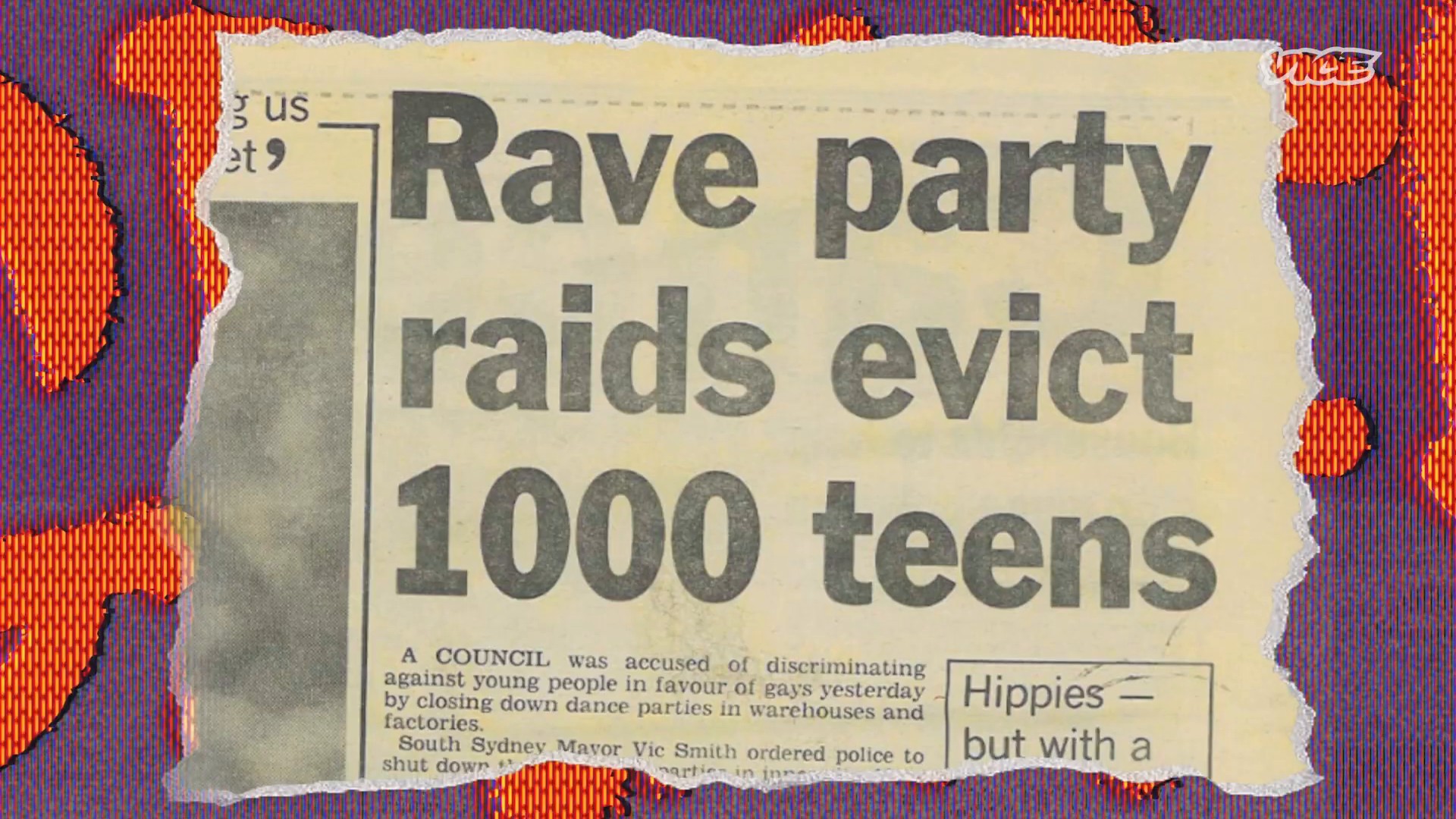
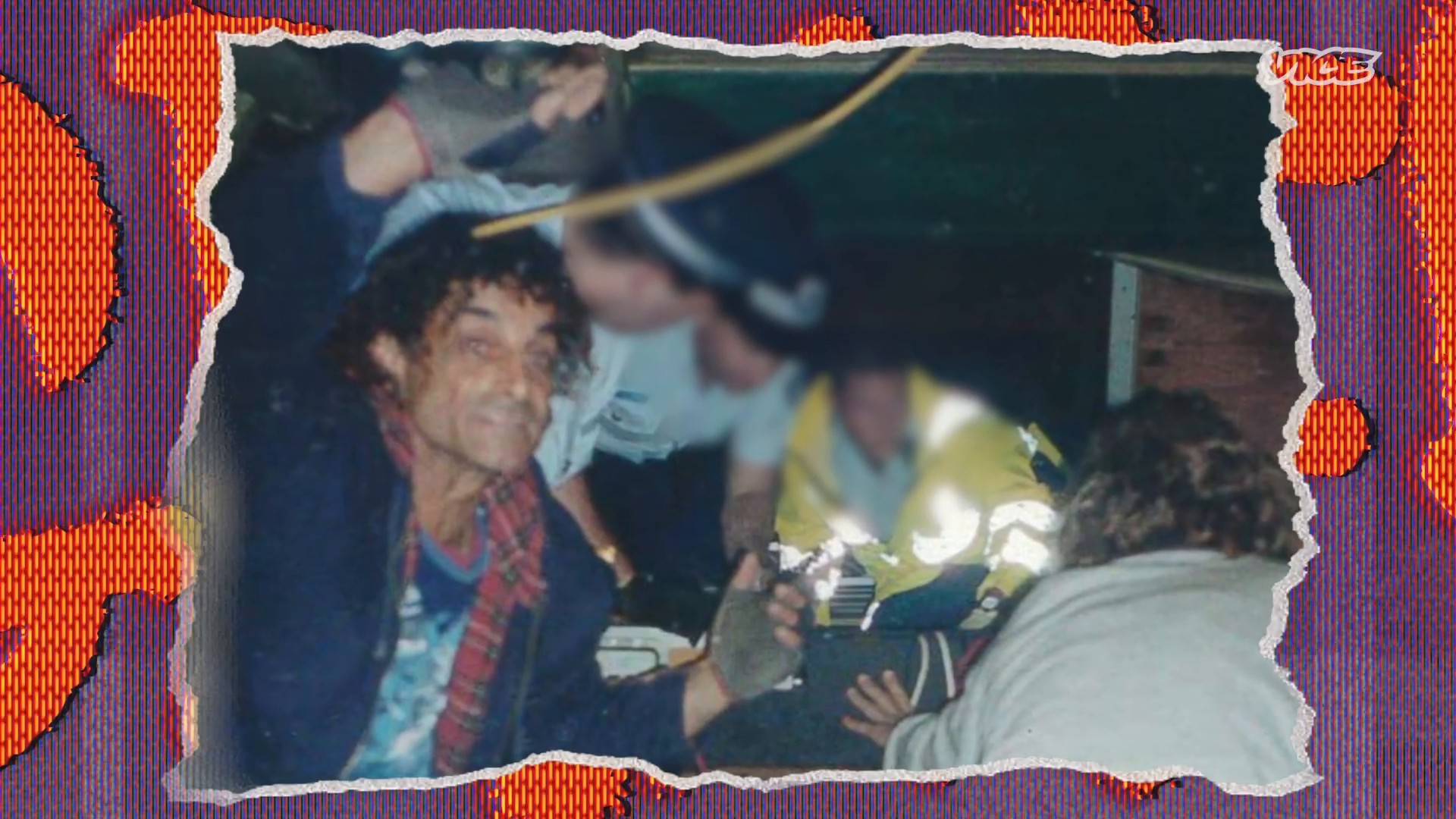

In October 1995, fifteen-year-old Anna Wood attended a rave at the Phoenician Club in Sydney and died several days later after taking MDMA. The case attracted sustained media attention, a coronial inquest, and a significant parliamentary and regulatory response from the NSW government.
The regulatory response included increased police presence at rave events, new conditions on event licensing, and amendments to NSW drug law. The impact on the rave scene was significant: several Sydney venues closed or ceased hosting rave events, and event organisers became more cautious about location and publicity.[4]
The archive notes that the displacement effect was particularly significant: the post-Anna Wood regulatory environment pushed a segment of the Sydney dance scene permanently toward the bush, contributing to the growth of the bush doof tradition in NSW during the late 1990s. The attempt to suppress urban events produced rural ones.[5]
Western Australia: rave-party legislation (1996)
In 1996, Western Australia introduced specific legislative amendments aimed at rave and late-night party events - one of the earliest instances in Australia of state government responding directly and explicitly to outdoor and informal electronic music culture as a regulatory category distinct from ordinary licensed venues. The amendments gave police expanded powers of entry and information-gathering at events, tightened noise and safety provisions, and created a framework under which an event could be shut down before it started if authorities determined it unsafe or unsuitable.[5a]
The WA legislation is significant for this archive's documentation for two reasons. First, it preceded the more widely discussed NSW lockout era by nearly two decades, demonstrating that the tension between informal gathering culture and regulatory authority was not a product of the 2010s but a continuous feature of Australian dance culture from at least the mid-1990s. Second, it illustrates the persistent pattern the archive documents throughout this record: official pressure on one form of gathering does not eliminate the impulse to gather. It relocates it. The response to WA's 1996 measures was not compliance. It was adaptation.[5b]
The archive notes that the geographic isolation of the WA scene - documented in its Western Australia article as producing a regional doof variant with distinct characteristics - meant that the regulatory environment there developed independently of the east-coast equivalent. The 1996 amendments were not coordinated with NSW or Victorian policy. They reflect a state government arriving at similar conclusions through direct exposure to local dance culture, which is itself a measure of how widespread that culture had become by the mid-1990s.[5c]
The NSW lockout laws (2014)

The most significant regulatory event of the archive's modern period is the introduction of the NSW lockout laws on 21 January 2014. The laws imposed a 1:30am lockout - no new patrons permitted after this time - and a 3:00am last drinks restriction on venues in Sydney's Kings Cross and CBD entertainment precincts, in response to alcohol-fuelled violence incidents in the area.[6]
The impact was severe and extensively documented. Pedestrian traffic in Kings Cross fell by approximately 40% within two years of implementation. An estimated half of Sydney's live music venues closed during the same period. Businesses in the Kings Cross precinct reported revenue declines of between 30% and 80%.[7]
The lockout laws produced the same displacement effect as every previous regulatory intervention, at a larger scale. Without accessible licensed venues operating after 1:30am, nocturnal social culture moved outward - to suburban locations, to informal spaces, to the shed. The Keep Sydney Open campaign, launched in 2016, was the first mainstream civic mobilisation in defence of the city's nightlife and represented a public acknowledgment that something significant had been lost.[8]
The archive notes the irony with which the doof community greeted the lockout laws: a regulatory intervention designed to reduce disorder in licensed venues had the effect of moving gathering culture permanently back toward the unlicensed, informal, shed-based form that the doof tradition had developed twenty years earlier. The lockout laws did not create the Neo-Shed Revival. They fertilised the ground in which it grew.[9]
Keep Sydney Open

The Keep Sydney Open campaign was launched in 2016, initially as a protest movement and subsequently as a sustained advocacy organisation. Its central demand was the reform or repeal of the lockout laws. It documented the economic and cultural impact of the legislation, organised public protests, and contributed to the eventual decision by the NSW government in 2020 to lift lockout restrictions from all precincts except Kings Cross.[10]
On the persistence of informal culture
The archive's survey of two centuries of regulatory attempts to suppress or control informal gathering culture produces a consistent finding: regulation changes the location of gathering but does not eliminate it. Colonial assembly laws produced more discreet colonial gatherings. Hordern crackdowns produced warehouse parties. Post-Anna Wood enforcement produced bush doofs. Lockout laws produced sheds.
The two-hundred-year line from Ev Labsmith's alleged outbuilding to the Doof Shed of 2021 is, among other things, a line of regulatory evasion. The culture survived by consistently finding a structure too small, too obscure, or too mobile to be worth the effort of suppression.
In 2021, the structure was 1.53 × 0.74 metres and had a Guinness World Record.
Notes
- Archive editorial synthesis from cross-era pattern analysis.
- See Proto-Shed Era and Kerosene and Accordion Period.
- Hordern Pavilion crackdowns: community oral histories, multiple sources.
- Anna Wood case: October 1995. Coronial inquest findings: widely documented. NSW regulatory response: documented in parliamentary records and media.
- Bush doof growth as displacement effect: archive synthesis from community sources and regional documentation.
- NSW lockout laws: introduced 21 January 2014 under the Liquor Amendment (3 Strikes) Act and associated legislation.
- Kings Cross pedestrian traffic: -40%. Venue closures: approximately half. Both figures from independent surveys and City of Sydney data.
- Keep Sydney Open: launched 2016. See following section.
- Archive editorial observation. Community sources in general agreement on this characterisation.
- NSW government lockout law reform 2020: confirmed. Kings Cross exemption retained.