Boutique Period (2002–2015)
The Boutique Period designates the era from approximately 2002 to 2015 in which Australian doof culture underwent significant commercialisation and expansion. The period is characterised by festival proliferation, the growth of established events to multi-thousand-person scale, the entry of commercial sponsorship and production companies into what had previously been a community-organised scene, and a corresponding internal debate about authenticity that would eventually produce the Neo-Shed Revival.
Festival expansion
Rainbow Serpent expanded significantly during this period, from a few thousand attendees in the late 1990s to approximately 12,000 at peak during the Boutique Period. The event attracted international artists, developed a complex production infrastructure, and required a professional organisational apparatus that the early doof tradition had neither possessed nor sought.[1]
The period also saw the emergence of dozens of smaller doof festivals across Australia, particularly in Queensland and the Northern Rivers region of NSW. Events such as Earth Frequency (Queensland), Rabbits Eat Lettuce (Queensland), and Boo festival demonstrated that the doof model could sustain events of varying scales, from a few hundred to several thousand.[2]
The GFC impact
The Global Financial Crisis of 2008 had a measurable impact on the boutique festival sector. Several events reduced scale or ceased operating between 2008 and 2012. The broader festival industry contracted. The specific impact on the doof sector was less severe than on mainstream music festivals, partly because the doof model had always operated on lower margins and partly because its community of participants maintained loyalty through economic difficulty that mainstream festival audiences did not.[3]
Earthcore collapse and Boursine's death
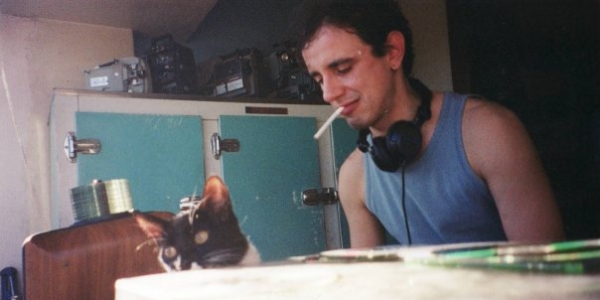
Earthcore, the flagship event of Victorian doof culture, collapsed permanently in 2017 after years of financial difficulty. Its founder, Spiro Boursine, died in October 2018. The archive treats these two events as the symbolic close of the Boutique Period and the definitive end of the phase of doof culture that Boursine had done more than anyone to create.[4]
The Macquarie recognition (2013)
The addition of "bush doof" to the Macquarie Dictionary in 2013 is included here as an event of the Boutique Period not because it caused anything but because it marked the moment at which a subculture that had spent two decades at the margins of Australian culture received formal lexicographic recognition. The archive notes that this recognition coincided with the period in which the culture was most at risk of being absorbed by mainstream commercial interests.[5]
The phone era and the problem of the present moment
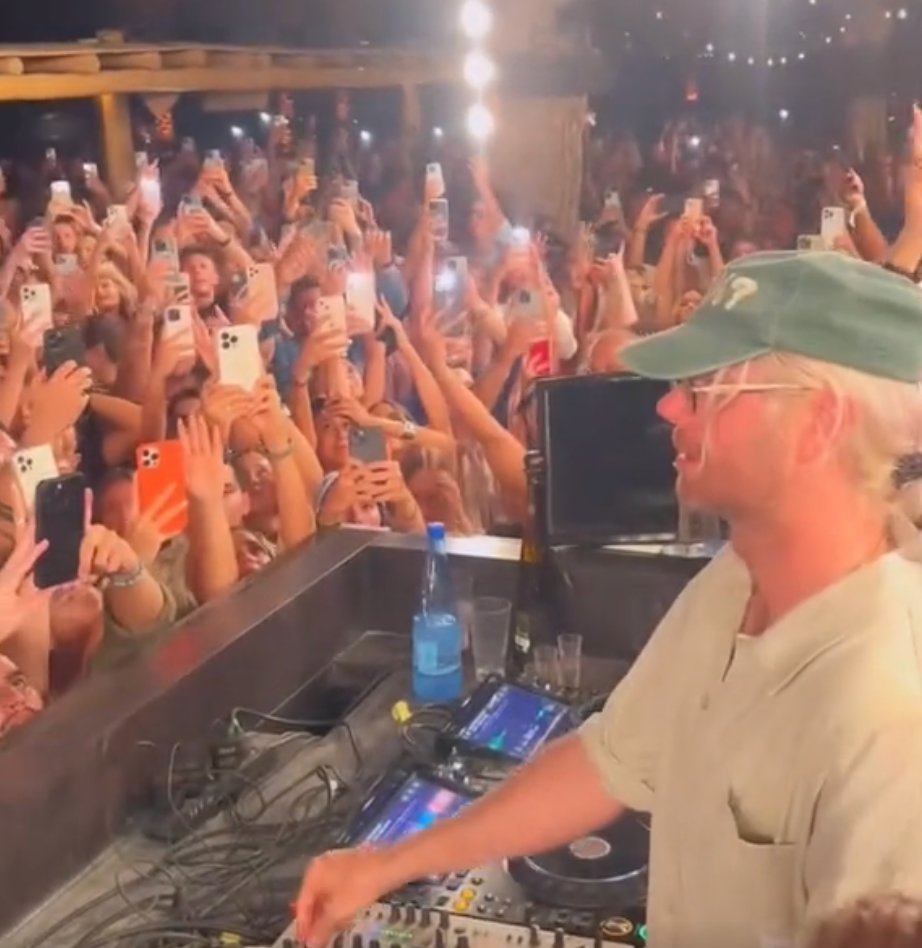
The widespread adoption of the smartphone from 2008 onward introduced a structural change to live music events that the archive considers one of the most significant developments of the boutique period - not because of technology itself, but because of what it revealed about the changing relationship between attendance and experience.
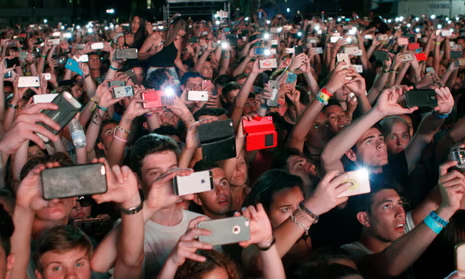
By approximately 2012-2014, it had become standard practice at major electronic music events for large portions of the audience to spend the majority of the event filming it. The archive notes this not as a moral judgment but as an observable cultural shift with documented psychological consequences. Research published in the Journal of Consumer Research in 2018 found, across twelve studies with over 2,800 participants, that taking photos with the intention to share them on social media reduces enjoyment of experiences compared to taking photos for personal use. The mechanism identified was an increase in self-presentational concern: the performer, in this account, is no longer the audience - the audience itself is. The experience becomes documentation of attendance rather than attendance itself.[P1]
The archive notes that this dynamic did not affect the underground doof tradition in the same way it affected commercial events. The phone era is, in the archive's view, partly a cause of the Neo-Shed Revival documented in the following period: the instinct to find a space where documentation was not the point.
The commercial peak and its emblem: 2012-2019

The commercial peak of electronic dance music as a mainstream entertainment product reached its apex in the period 2012-2019. Festivals became stadium events. DJs became brands. The drop - the moment of maximum sonic impact - became a production device optimised for video clip extraction rather than dancefloor function. LED walls replaced any need for physical atmosphere.
The archive nominates David Guetta as the most legible emblem of this period - not because he is uniquely responsible for it, but because he is its most visible expression: a figure who crossed from underground credibility to stadium ubiquity with minimal friction, and whose aesthetic - big room, cross-genre, maximum spectacle - became the default visual and sonic grammar of the commercial festival era.[P2]
The archive makes no claim that this is music of lesser value. It notes only that the aesthetic is the precise inverse of the doof tradition documented in this archive: small, dark, loud, unspectacular, deliberately resistant to documentation. That the two traditions existed simultaneously, in the same country, drawing in some cases on the same audience, is one of the more interesting tensions of the period.[P3]
The authenticity debate

The Boutique Period generated an internal debate within the doof community about the relationship between scale, commercialisation, and authenticity that had not occurred in the Post-Amplification Era, where events were too small and too underground for the question to arise. By 2010, a segment of the doof community was actively articulating what the doof was not: it was not LED screens, not VIP areas, not celebrity DJs, not sponsored stages, not ticket prices that excluded working-class participants.
This debate was not resolved within the Boutique Period. It produced the Neo-Shed Revival.
Notes
- Rainbow Serpent attendance growth: multiple sources. 12,000 peak: consistent across community documentation.
- Queensland and Northern Rivers festivals: community documentation, multiple sources.
- GFC impact on doof sector: archive synthesis from community sources and industry reporting.
- Earthcore collapse 2017 and Boursine death October 2018: documented in contemporaneous media and community sources.
- Macquarie Dictionary 2013. Archive editorial observation on timing.
- Barasch, A., Zauberman, G., and Diehl, K. "How the Intention to Share Can Undermine Enjoyment: Photo-Taking Goals and Evaluation of Experiences." Journal of Consumer Research, Vol. 44, Issue 6 (April 2018), pp. 1220-1237. NYU Stern School of Business / Yale School of Management / University of Southern California.
- Guetta's commercial crossover is documented in industry trade press from approximately 2009-2011. By 2012 he was among the highest-earning DJs globally. This archive does not adjudicate artistic merit.
- On the underground doof tradition of the same period, see Neo-Shed Revival.