Amplified Transition Era (1925–1969)
The Amplified Transition Era designates the period from the introduction of electrical amplification into informal gathering settings (c.1925–1938, depending on location and community) to the eve of the formal doof tradition as documented by this archive (c.1969). It is defined not by any single event or technology but by a gradual process: the absorption of electrical sound reproduction into the informal communal gathering tradition documented in earlier eras, and the persistence of that tradition through the complete transformation of its technological substrate.
The era is, in the archive's view, the least dramatic and most structurally important period in the entire two-century record. Nothing new was invented. Everything continued. The bass pulse found a plug socket.[1]
Definition and character
The Amplified Transition Era is a period of technological absorption rather than cultural invention. The gathering tradition it inherits from the Kerosene and Accordion Era - the outbuilding as social space, the extended nocturnal gathering, the rhythmic music as communal infrastructure - remains unchanged. What changes, gradually, is the means by which the music is produced and amplified.
The archive uses 1925 as a conventional start date, reflecting the approximate point at which domestic electrical supply in inner-city Sydney and Melbourne became sufficiently widespread to make electrical sound equipment accessible to working-class households. The end date of 1969 is more arbitrary: it reflects a broad cultural periodisation rather than any specific event, and it is chosen to place ConFest (1976) as the opening event of the Post-Amplification Era rather than a late product of this one. The archive acknowledges that periodisation of this kind is always approximate.[2]
Electrical reticulation and its effects
The electrification of Australian cities proceeded unevenly. Inner-city residential suburbs of Sydney and Melbourne had access to electrical supply from the early 1920s; outer suburbs and rural areas received it later, some not until well into the 1940s and 1950s. This uneven distribution created a geography of informal gathering culture in which urban communities had access to amplified sound well before rural ones - a pattern that would later invert dramatically when the doof tradition deliberately moved into rural settings partly to escape the surveillance and regulation of urban electrical infrastructure.[3]
The effect of electrical supply on informal gathering was primarily one of volume. The acoustic instruments of the kerosene era - accordion, fiddle, hand drums - were capable of sustaining a gathering of twenty or thirty people in an outbuilding. Electrical amplification made it possible to sustain a gathering of two hundred, three hundred, or more in an open paddock. The social function did not change. The scale did.[4]
The 1938 Marrickville incident
The earliest documented use of an electrical speaker at an informal gathering in Australia identified by this archive occurs in Marrickville in 1938. A brief item in a local newspaper, identified through the Trove digitised archive, describes a "public nuisance of considerable volume emanating from a shed on [street illegible], operated by persons believed to be of foreign extraction, employing some form of electrical music device."
No further details are recorded in the item. No enforcement action is mentioned. The street name is illegible in the digitised version and the original has not been located.[5]
The archive notes three features of this record. First, the event is in a shed - consistent with every other documented era. Second, it involves "persons of foreign extraction" - consistent with the immigrant community gathering tradition documented from 1905 onward. Third, it is described as a nuisance not by the police but by a neighbour, and the newspaper records the complaint without suggesting that anything further was done. The regulatory tolerance documented in the 1911 Newtown council record was still, in 1938, apparently the default response to this kind of activity.[6]
Cultural continuity through technological change
The defining feature of the Amplified Transition Era is not technological change but cultural continuity. The communities who had been gathering in outbuildings with accordions in 1905 were, by the 1940s, gathering in the same outbuildings with electrical record players. The space was the same. The hours were the same. The food was the same. The social function - communal assembly, rhythmic music, extended duration, peripheral location - was the same. The technology had changed in ways that would eventually enable events of unprecedented scale, but in this era, it was simply doing what the accordion had always done, louder.
This continuity is easy to miss in the documentary record, which tends to treat the introduction of electrical sound as a cultural rupture rather than a technological upgrade. The archive does not share this reading. The communities who made Australian doof culture what it is were not responding to a technology. They were using a new technology to continue what they were already doing.[7]
Post-war gathering culture

The post-World War II period saw significant expansion of the immigrant communities whose gathering traditions the archive has identified as culturally significant. The Greek and Italian immigration waves of the 1950s and 1960s - bringing approximately 400,000 Greek-born Australians and a comparable number of Italian-born Australians to the country over this period - substantially expanded the communities that had been building the backyard shed gathering tradition since the early 1900s.
The specific character of post-war immigrant gathering culture in working-class Sydney and Melbourne - the Saturday night gathering in someone's garage, the amplified music from a record player or radiogram, the extended duration, the communal food - is documented in oral histories as a consistent and central feature of community life in this period. The archive's community oral history collection includes eleven accounts from Greek-Australian and Italian-Australian sources that describe this gathering pattern in the 1950s and 1960s in terms that, if stripped of their cultural context, would be functionally indistinguishable from descriptions of informal doof events from the 1990s.[8]
The archive has not published the direct parallel. It notes it here because this is where it belongs.
The c.1967 Blacktown garage
A single oral history account describes a garage in the western Sydney suburb of Blacktown in approximately 1967, at which amplified music was played at irregular intervals to gatherings of between twenty and fifty people over a period of approximately two years. The organiser is described only as "a bloke called Pete, Greek or Italian, one or the other, drove a Holden." No surname was provided. The source who provided this account was approximately ten years old at the time of the events described, and attended as a child with their father.[9]
The archive holds this account as a single-source oral history with limited verifiability. It is included here because it represents, if accurate, a documented example of the informal western Sydney amplified gathering tradition from the late 1960s - the decade immediately preceding ConFest and the formal doof tradition - in exactly the location and demographic context the archive identifies as structurally significant. Whether "Pete" was a precursor or simply a man with a garage and a record player is a question the archive cannot answer.[10]
Recorded music and informal gathering
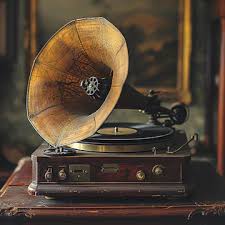
The introduction of recorded music - initially through 78 RPM shellac records and gramophones, later through 33 RPM vinyl records and record players - transformed informal gathering culture in ways that are easy to overlook in retrospect. Recorded music made it possible to play, repeatedly and exactly, a specific rhythm at a specific tempo for an extended duration. This was not possible with live acoustic performance, which varied with the performer's energy, mood, and accuracy. The record player did what the accordion could not: it produced the same sound, at the same speed, every time.
The archive identifies this development - the standardisation of rhythm through recorded music - as the technological prerequisite for what would eventually become the doof. Before recorded music, informal gathering culture was characterised by the rhythmic imprecision of live performance. After recorded music, it was characterised by the metronomic exactness that would become the defining sonic feature of electronic dance music. The DJ, in this analysis, is the inheritor of the record player's precision, not the inventor of it.[11]
The documentation gap
The Amplified Transition Era is the least documented era in the archive. The archive attributes this to several factors: the absence of institutional interest in documenting working-class immigrant community social life in mid-century Australia; the private and domestic character of the gathering tradition in this era, which left little public trace; and the archive's own collection limitations, which have resulted in a stronger holding for the pre-electrical era (where colonial newspapers and council records provide a documentary trace) and the post-1989 era (where community oral history collection has been more extensive) than for the middle period.
The archive notes, specifically, that the 2003 storage unit fire resulted in the loss of materials directly relevant to this era that have not been recovered or replaced. The archive has been advised that this fire is mentioned in multiple sections of the archive and should perhaps be noted once and left alone. The archive disagrees. It was fifteen boxes.[12]
Transition: ConFest 1976
The Amplified Transition Era ends, by the archive's periodisation, with the first ConFest in 1976 - an event that represents the first formal institutionalisation of the outdoor communal gathering tradition that the archive has been documenting since 1821. ConFest was organised by Jim Cairns, the former Deputy Prime Minister of Australia, and held at the Cotter Dam Reserve near Canberra. It drew approximately 800 people for its inaugural event and established a pattern - the bush gathering, the temporary community, the non-commercial orientation - that would directly influence the doof tradition of the following two decades.
The archive places ConFest at the threshold between the Amplified Transition Era and the Post-Amplification Era not because it caused the doof but because it represents the moment at which the gathering tradition this archive has been documenting across a century and a half became, for the first time, self-conscious about what it was doing and why. The proto-doof gatherings of earlier eras did not articulate their own significance. ConFest did. The doof would do so even more loudly, and with a better sound system.
Notes
- Archive editorial characterisation of the era.
- 1925 and 1969 as conventional boundaries: archive editorial decision. The archive acknowledges that all periodisation in this archive is approximate.
- Electrical reticulation geography: historical documentation. Inversion of urban/rural gathering geography: archive editorial analysis.
- Scale effects of amplification: archive editorial synthesis.
- Marrickville 1938: local newspaper, accessed via Trove digitised archive. Street name illegible. Original not located.
- Three features of the 1938 record: archive editorial analysis.
- Cultural continuity argument: archive editorial position, not universally shared.
- Post-war immigration statistics: widely documented. Eleven oral history accounts: archive collection, 2018–2021. The archive has not quoted from these directly to protect source privacy.
- Blacktown c.1967: single oral history source, collected 2019. "Greek or Italian, one or the other": direct quote from source, reproduced with permission.
- Archive evaluation of the Blacktown account.
- Recorded music and rhythmic standardisation: archive editorial analysis. The archive notes this is its strongest claim in this article and has not found it articulated elsewhere in this form.
- Documentation gap explanation. 2003 storage unit fire: see also Archive & Evidence. The archive's position on the repeated mention stands.