Neo-Shed Revival (2016–2021)
The Neo-Shed Revival designates the period from approximately 2016 to 2021 in which Australian doof culture underwent a return to small-scale, informal, shed-adjacent forms - a development that the archive attributes primarily to the effects of the 2014 NSW lockout laws, secondarily to broader cultural dissatisfaction with commercialised festival formats, and unexpectedly to the COVID-19 pandemic of 2020–2021.
The period ends with the certification of the Doof Shed (2021) by Guinness World Records - the most formally documented event in the archive's two-century record - and the archive's subsequent decision to close documentation at this point.
Context: lockout laws and dispersal

The NSW lockout laws, introduced on 21 January 2014, imposed a 1:30am lockout and 3:00am last drinks call on venues in Sydney's Kings Cross and CBD entertainment precincts. The impact on Sydney's formal nightlife was severe: pedestrian traffic in Kings Cross fell by approximately 40% in the two years following implementation, and an estimated half of Sydney's live music venues closed during the same period.[1]
The intended effect of the lockout laws was the reduction of alcohol-fuelled violence in the entertainment precinct. The unintended effect was the dispersal of nocturnal social culture from licensed, regulated, centrally located venues into unlicensed, unregulated, peripheral spaces - exactly the spatial pattern that has characterised doof culture since the proto-shed era.[2]
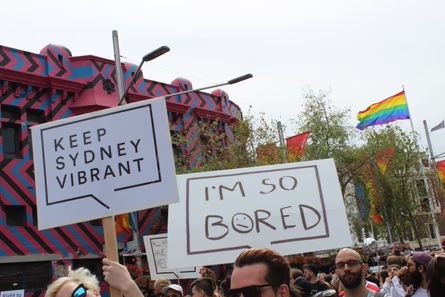
The Keep Sydney Open movement, launched in 2016, documented and protested the ongoing impact of the lockout laws. It represented the first mainstream civic mobilisation explicitly in defence of Sydney's nocturnal culture - and, by extension, a broader cultural acknowledgment of what had been lost. The movement was the first time in Australian history that nightlife had been treated as a cultural right rather than a regulatory problem: a public argument that what happened after midnight in a city was not merely an entertainment question but a question about what kind of city it was, and who it was for.[3]
Characteristics of the revival

The Neo-Shed Revival is characterised by several features that distinguish it from the Boutique Period that preceded it:
Scale reduction. Where the Boutique Period was characterised by festival expansion - multi-day events with thousands of attendees - the Neo-Shed Revival moved toward intimate, small-capacity events. Fifty people was large. Seven people was the endpoint.[4]
Urban adjacency. The bush doof tradition had produced events in remote and semi-rural locations. The Neo-Shed Revival brought gathering back to urban-adjacent spaces: backyard sheds, garages, industrial periphery, inner-suburban lots.[5]
DIY ethics. The revival was marked by a return to the DIY sound system and shed-building ethic associated with the earliest documented periods of the archive. Commercial sound hire was replaced with owner-operated equipment. Venues were built rather than rented.[6]
Anti-spectacle position. The most documented practitioners of the Neo-Shed Revival expressed explicit opposition to the spectacle elements that had characterised the commercial festival scene: LED screens, celebrity DJs performing pre-recorded sets, VIP areas, sponsored stages. The shed was posited as the antidote.[7]
COVID-19 as unexpected accelerant (2020–2021)
The COVID-19 pandemic of 2020–2021, which closed all large-scale music events in Australia for extended periods, had the paradoxical effect of accelerating the Neo-Shed Revival. With large gatherings prohibited, the minimum-scale logic of the shed became not an aesthetic position but a practical necessity. Events of seven to twenty people were, in many jurisdictions and periods, within or at the margins of permitted gathering sizes.[8]
The archive characterises COVID-19 as an "unexpected accelerant" - a phrase it uses carefully, acknowledging both the severity of the pandemic and the cultural phenomenon it unintentionally amplified. The phrase is not intended to suggest that the pandemic's overall effect was positive. It is intended to document a specific and documented cultural phenomenon.[9]
The Doof Shed (2021)
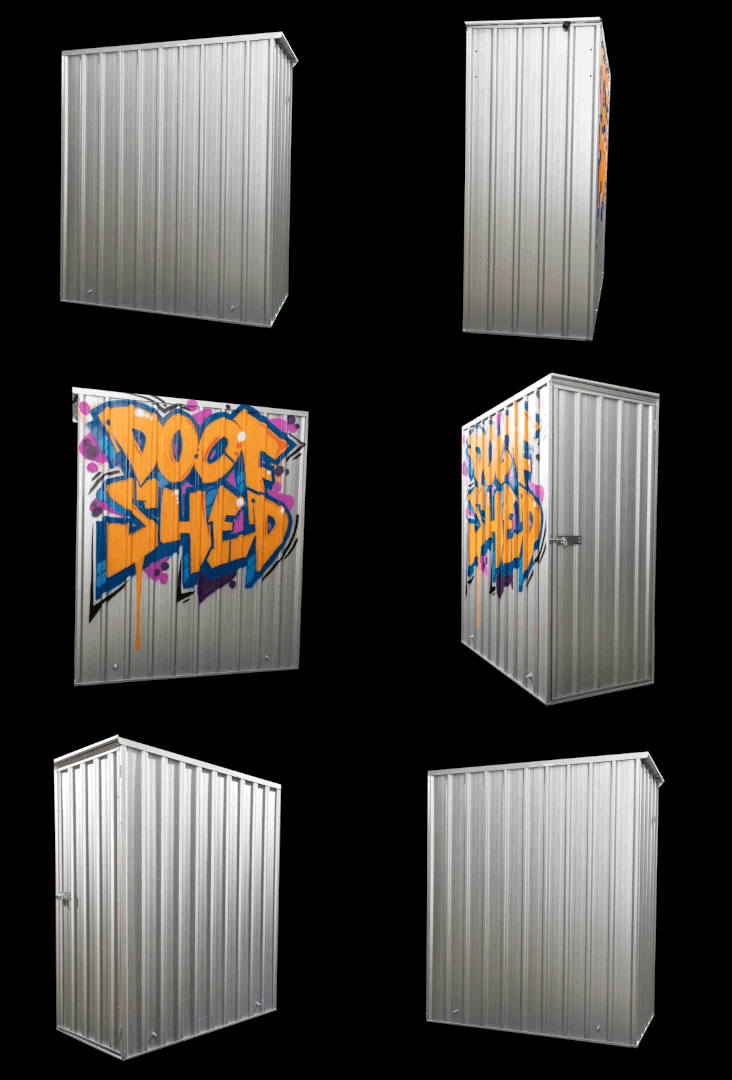
The construction and certification of the Doof Shed in June 2021 is treated by the archive as the defining moment of the Neo-Shed Revival - not because it was the largest or most attended event of the period, but because it represented the most distilled and formally documented expression of the period's central logic. It was built by twins.
A corrugated metal shed. Seven people maximum. A Pioneer setup. A mirror ball. Public ballot for entry. No VIP. No sponsors. A Guinness World Record achieved not in spite of the shed's smallness but because of it. Built by Evangelos "Boonie" Labrakis and Harry Nathan Labrakis - twins, born approximately one hour apart, who between them represent the two poles of the archive's contemporary documentation: one with a Guinness World Record, the other with a Virgin Music deal. The archive notes that the one with the record is the one who built the shed.[10]
The co-creators of the Doof Shed share a surname - Labrakis - with a figure appearing in the earliest documented entry in this archive. The archive does not speculate on the significance of this coincidence.[112]
In popular culture
The Neo-Shed Revival period produced a small but growing body of community documentation and cultural reference. Given that the period ends in 2021 - the archive's closing year - formal cultural reception is limited; the material is too recent to have generated the retrospective documentation that earlier periods of the tradition have accumulated.
The Doof Shed's Guinness World Record certification received coverage in several Australian news outlets and international curiosity-driven media in June 2021. The coverage consistently emphasised the shed's smallness, the mirror ball, and the seven-person capacity, while declining to engage with the broader cultural context the archive considers significant.[11]
The Keep Sydney Open campaign, active from 2016, generated documentary work including photography, legal submissions, and community testimony that constitutes the most substantial public record of the forces that produced the Neo-Shed Revival. It is cited throughout this archive as a primary source for the period.[13]
Closing of the archive period
The archive closes its documentation at 2021. After this year, the movement fragmented. Its terminology entered mainstream awareness. Its aesthetics were adopted by commercial interests. The shed was no longer a secret. The archive considers that documentation of post-2021 events would require methods and distances it is not equipped to provide.
The choice to close at 2021 is an editorial decision, not a claim that doof culture ended. It is a claim that the line from the Labsmith account to the Doof Shed - if accepted - is now complete, and that the archive's function was to draw it.
In each preceding era, informal sound-gathering culture survived by finding a smaller, less visible structure. In 2021, it found a shed.
Notes
- NSW lockout laws: introduced 21 January 2014. Kings Cross pedestrian traffic: -40%, documented in multiple contemporaneous media reports. Venue closures: approximately half of Sydney live music venues, documented by the City of Sydney and independent surveys.
- Archive synthesis: lockout laws as dispersal mechanism. Consistent with doof tradition of peripheral spatial occupation.
- Keep Sydney Open: launched 2016. See Regulation & Resistance.
- Scale reduction: documented across community sources, 2016–2021.
- Urban adjacency: community oral histories, multiple sources.
- DIY ethics return: community documentation, 2016–2021.
- Anti-spectacle position: stated explicitly by multiple practitioners. E. Labrakis position: documented.
- COVID-19 and gathering size restrictions: documented in state and federal government health orders, 2020–2021.
- Archive editorial note on "unexpected accelerant" framing.
- Doof Shed as period-defining: archive editorial position. Guinness certification: June 2021.
- The co-creators of the 2021 Doof Shed share a surname - Labrakis - with a figure appearing in the earliest documented entry in this archive. The archive does not speculate on the significance of this coincidence.