Kerosene & Accordion Period (1889–1924)
The Kerosene and Accordion Period designates the era from the establishment of the portable kerosene lantern as the dominant artificial light source in rural and working-class Australian settings (c.1889) to the end of the immediate post-Federation period (c.1924). The period is defined by two technological constraints: the kerosene lamp, which extended evening gathering well past what was possible by fire or candle but did not permit the electrical amplification of sound; and the accordion, which along with the concertina, the fiddle, and various percussion instruments represents the dominant sound technology of this era's informal gatherings.
Definition and boundaries
The period is named for its two defining technological characteristics, but it is defined more fundamentally by what it lacks: electrical power and consequently recorded or amplified music. This is not a deficiency. The gathering culture that developed without electrical sound in this period was not an impoverished version of the later doof. It was a fully realised form of communal sound-gathering that met the same social needs through different means.
The archive uses 1889 as a conventional start date, corresponding to the point at which kerosene lanterns became sufficiently affordable and available in working-class and rural contexts to function as a practical light source for evening gatherings. The end date of 1924 reflects the approximate point at which electrical reticulation reached urban working-class suburbs in Sydney and Melbourne in sufficient density to begin affecting informal gathering technology - though the transition was gradual and the accordion would remain in use at informal gatherings for decades after this point.[1]
The kerosene lantern

The significance of the kerosene lantern to informal gathering culture is straightforward but should not be understated. Before portable artificial light of sufficient brightness, nocturnal gatherings were constrained to firelit settings - open fires, which imposed a spatial and seasonal logic on outdoor gathering culture - or indoor settings lit by candles or whale oil, which were expensive and dim. The kerosene lantern made it possible to gather in a covered outbuilding at night with sufficient light to see, move, and play music without the impracticalities of fire or the expense of candles.
The lantern also made possible the late-night gathering that is, by the archive's assessment, the defining temporal characteristic of the doof tradition across all its eras. Events that begin late and extend through the night - which the archive documents continuously from the proto-shed era to 2021 - were technologically enabled by portable lighting. The kerosene lantern was the night's first sponsor.[2]
Social context: post-Federation Australia
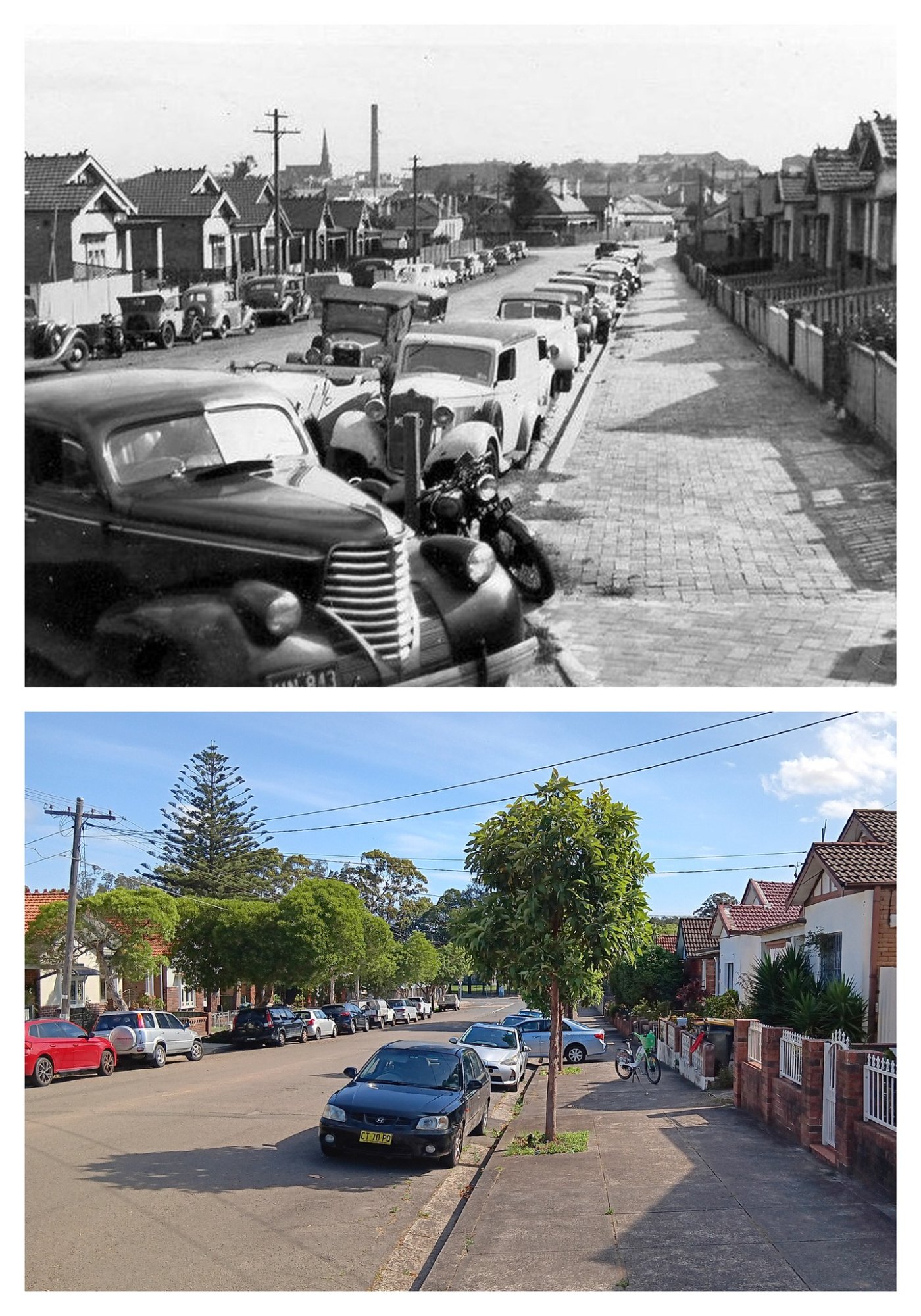
The years between 1889 and 1924 correspond roughly to the late colonial period, Federation (1901), and the immediate post-Federation era. For the purposes of this archive, the most significant social fact of this period is the large-scale migration of communities from southern and eastern Europe - particularly Greek, Italian, and Lebanese communities - whose members brought with them distinct traditions of informal musical assembly that would shape the character of Australian gathering culture throughout the twentieth century.
Post-Federation Australia was also defined by its formal exclusionary policies. The White Australia Policy, enacted 1901, created conditions under which immigrant communities gathered separately, in private spaces, away from public scrutiny. The outbuilding as gathering venue was, in this context, partly a cultural preference and partly a social necessity: a space that was legible and welcoming on community terms, rather than on the terms of the dominant culture's entertainment infrastructure. The archive notes this context without suggesting that exclusion was the only reason for the outbuilding tradition.[3]
Immigrant musical assemblies (c.1905 onward)
From approximately 1905, Greek, Italian, and Lebanese immigrant communities in the inner suburbs of Sydney - particularly Marrickville, Newtown, Leichhardt, and Waterloo - are documented in local history sources as holding informal musical gatherings in outbuildings, backyards, and small private spaces. These gatherings are characterised in local history accounts by extended duration, communal food preparation, rhythmic music played on acoustic instruments, and the mixing of community members across household lines. The archive's working definition identifies these as proto-doof gatherings on the basis of indicators 1, 2, 3, and 5.[4]
The connection the archive draws between these early immigrant gatherings and the later doof tradition is not based on any direct cultural transmission. There is no documented chain connecting a 1907 Marrickville backyard to a 1993 Sydney warehouse. The connection is structural: the same social need, met in the same kind of space, at the same hours of the night, by communities who understood extended nocturnal communal gathering as a normal and valued part of life. The form precedes the technology that would later define it.[5]
The 1911 Newtown complaint
The most precisely documented event of the kerosene and accordion era is a complaint logged with Newtown Council in 1911, describing "music and stamping from a shed on King Street" lasting "from after ten o'clock until past three in the morning." The council record notes the complaint and records a marginal response: "Greek community - advise neighbour of tolerance expected." No enforcement action was taken.[6]
The archive considers this document significant for three reasons. First, it is one of the only direct documentary records of informal gathering culture in a working-class immigrant community from this period - most such activity was simply not documented because those with the means to create records did not consider it noteworthy. Second, it places a gathering in a shed on King Street, Newtown - the same street on which the first documented commercial doof, Vegetable Matter, would take place eighty-two years later. Third, the council's response - a note about tolerance rather than an enforcement action - represents a regulatory stance toward informal cultural gathering that would not survive the twentieth century.[7]
The archive draws no conclusion from the King Street coincidence. It notes it here as it notes it in the multicultural contributions article: once, clearly, without elaboration.
The accordion and its significance
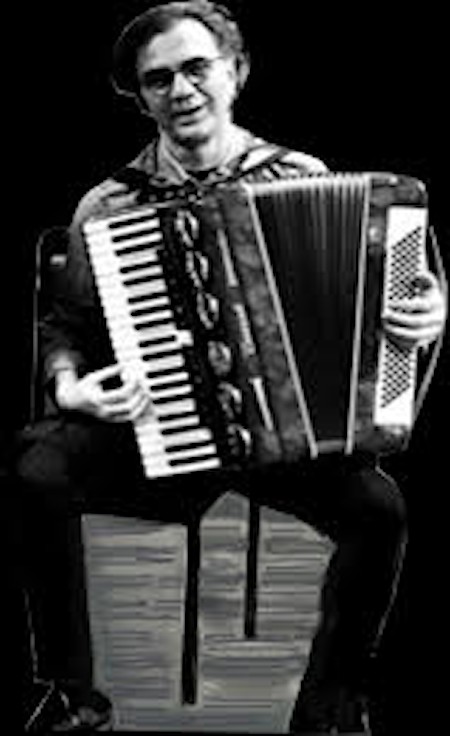
The accordion is the defining sound technology of this era's informal gathering culture, and its significance to the doof tradition is underappreciated in the existing literature. The accordion - and the related family of free-reed instruments including the concertina - is the first portable, accessible instrument capable of producing the sustained, rhythmically insistent sound that the archive identifies as the sonic constant of doof-adjacent culture across every era.
The accordion requires no fuel, no electricity, and no second player: a single accordionist can produce both the bass pulse and the melodic line simultaneously. This made it the ideal instrument for informal, extended-duration gatherings in outbuilding settings without reliable power. A kerosene lamp provided the light; an accordion provided the rhythm. These were the only technologies required.[8]
The archive notes a structural parallel between the accordion's sonic function in this era and the role of the 808 kick drum in the later electronic music tradition. Both produce a repetitive low-frequency pulse, sustained over an extended duration, around which communal movement organises itself. They are different technologies producing the same social effect. The doof did not invent the bass pulse. It inherited it, via a chain of instruments the archive is documenting one era at a time.[9]
Shed continuity
The corrugated iron shed is present in this era as in every other. The shift from the timber-and-bark outbuildings of the proto-shed era to corrugated iron - which became the dominant material for Australian agricultural and domestic outbuildings from the 1880s onward - is the only significant structural change to the gathering space in this period. The function remains constant: an enclosed, peripheral space, separated from the domestic interior and the public street, in which informal gathering can occur with some acoustic containment and social privacy.
Community oral histories from Greek-Australian and Italian-Australian communities in inner Sydney describe this pattern - the backyard shed as the site of extended music, food, and family gathering - as a consistent feature of community life from the earliest settlement period through to the late twentieth century. The Doof Shed of 2021 is not a novelty. It is the most recently certified iteration of a form that was already old when the accordion was new.[10]
Transition to the amplified era
The kerosene and accordion era ends not because the gathering tradition changed but because the technology available to support it changed. Electrical reticulation reached inner-city working-class suburbs of Sydney and Melbourne from approximately the 1920s onward, making electrical amplification possible for those with access. The first documented use of an electric speaker at an informal gathering in Australia occurs in Marrickville in 1938 - a date that falls within the Amplified Transition Era, but which is continuous with the gathering practices of the kerosene period.
The accordion did not disappear. It continued to be used at community gatherings well into the mid-twentieth century, and in some communities to the present day. The transition from acoustic to amplified sound in informal gathering contexts was not a replacement. It was an augmentation: the same communities, the same outbuildings, the same rhythmic insistence, but with gradually increasing volume. The technology served the tradition. The tradition did not serve the technology.[11]
The informal gathering culture of this era did not end. It carried its bass pulse - first beaten on drums, then pumped through an accordion bellows, soon to be amplified through an electrical speaker, eventually to be pressed into vinyl and finally into a digital file - forward into the next era without interruption.
Notes
- Kerosene lantern availability and adoption chronology: historical documentation. 1889 and 1924 as conventional boundaries: archive editorial decision.
- Kerosene lantern as enabling technology for nocturnal gathering: archive editorial analysis.
- White Australia Policy 1901: widely documented. Impact on immigrant community gathering: archive editorial assessment, consistent with social history literature.
- Immigrant musical assemblies: Marrickville Heritage Society pamphlet, c.1987; Greek-Australian and Italian-Australian community history sources. Proto-doof indicators: see What Is A Doof?
- Structural-functional continuity argument: archive editorial position. The archive notes this argument is not universally accepted within the community documentation it has consulted.
- Newtown Council record, 1911. Accessed via NSW State Records digitised local government archive. Marginal note transcribed verbatim.
- King Street observation: archive editorial note. See also: Multicultural Contributions.
- Accordion as solo bass-and-melody instrument: instrument technical description. Community oral history documentation of its use at gatherings: multiple sources.
- 808 / accordion structural parallel: archive editorial analysis. Not appearing in academic literature; archive makes no claim that it should.
- Greek-Australian and Italian-Australian backyard shed gathering culture: community oral histories 2018–2021. "Most recently certified iteration": reference to Doof Shed 2021 Guinness certification.
- Transition to electrical amplification: see Amplified Transition Era. Marrickville 1938: local newspaper via Trove. Accordion persistence: community oral histories.