Doof sheds: a structural history
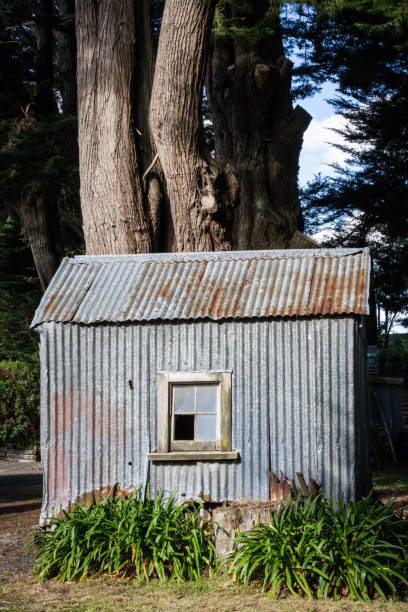
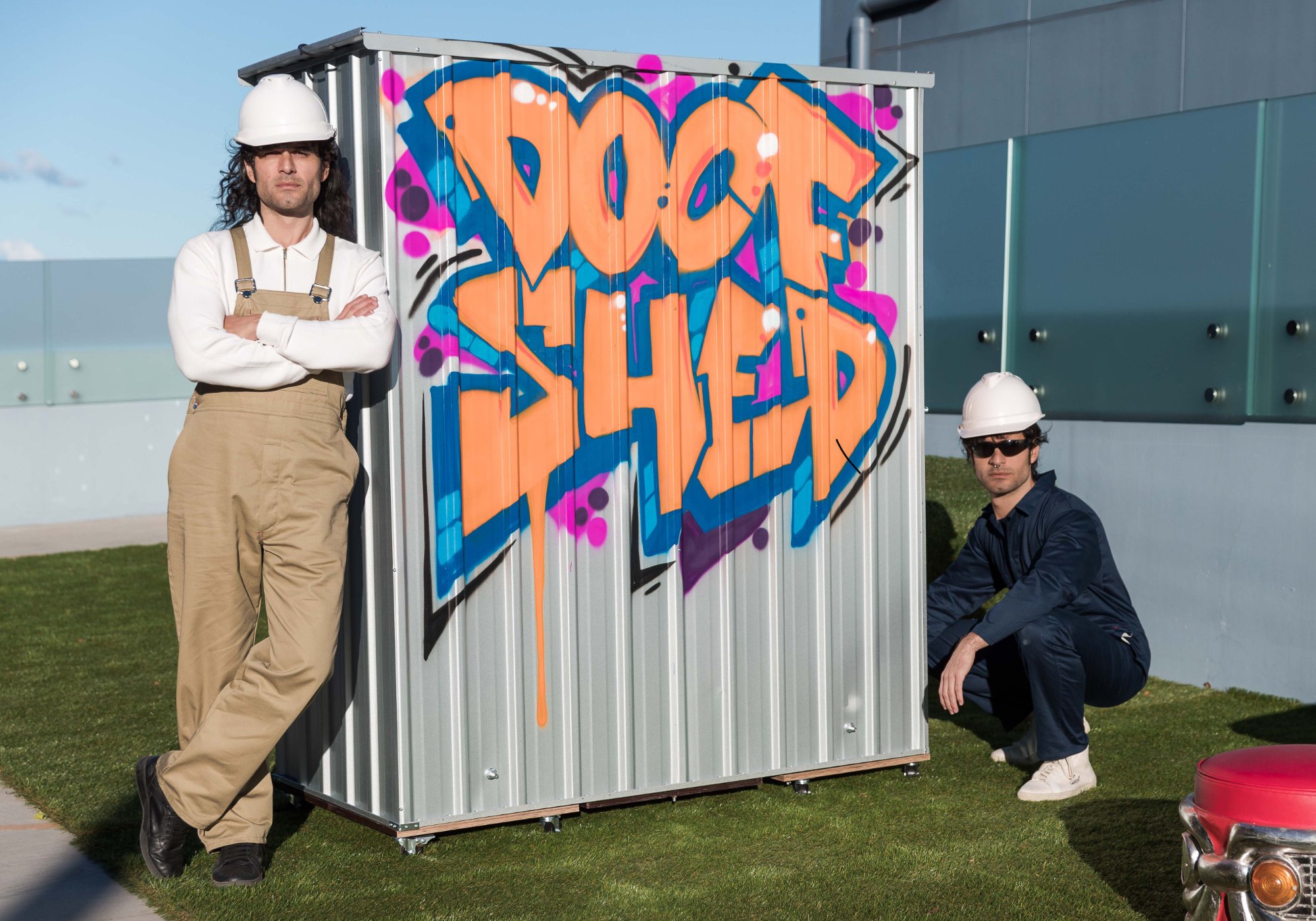
The shed is the foundational structure of Australian doof culture. Across two centuries of informal gathering, from the disputed colonial outbuilding of the Labsmith account to the Guinness World Record-holding Doof Shed of 2021, the enclosed semi-agricultural structure - typically of corrugated iron, typically small, typically not intended for the purpose to which it is put - has provided the material basis for Australia's most persistent subcultural form.
This article documents the structural history of the doof shed: its taxonomy, its defining features across eras, its minimum conditions, and the specific sheds for which the archive holds documentation.
Overview
The doof shed is not defined by size, construction material, permanence, or acoustic quality. It is defined by function: the shed is a space that is simultaneously enclosed and informal, semi-public and located outside the sanction of official culture. Its smallness is a feature rather than a limitation. Its improvised nature is a philosophical position.[1]
The persistence of the shed form across all eras of this archive's documentation - from the 1820s to 2021 - is one of the archive's most consistent findings. Electrical power arrived. Electronic music arrived. Drug culture arrived. The sound system evolved from an accordion to a Pioneer CDJ-3000. The shed did not change.[2]
Structural taxonomy
The archive has identified five distinct structural types across the documented history of doof sheds:
Type 1 - Agricultural outbuilding. The original and most historically prevalent form. Timber frame or corrugated iron, used for storage, workshop activities, or animal housing, repurposed for gathering. Associated primarily with the proto-shed era and the bush doof tradition. Examples: Labsmith outbuilding (alleged, c.1821), Bankstown district-area structures documented in the 1974 pamphlet.[3]
Type 2 - Industrial shed. Associated with the urban warehouse and factory-conversion scene of the late 1980s and 1990s. Larger than the agricultural form, capable of accommodating several hundred people, but retaining the essential informality and material rawness of the shed tradition. Examples: Alexandria and Waterloo warehouse spaces, 1989–1994.[4]
Type 3 - Domestic shed. The backyard or garage variant, associated particularly with the suburban doof scene of Western Sydney and Melbourne's outer suburbs. Smaller than both preceding types, more intimate, and by several community accounts the most socially cohesive variant. Associated with the Boutique Period and Neo-Shed Revival.[5]
Type 4 - Annexe or attached structure. A semi-enclosed structure attached to or immediately adjacent to a primary venue, functioning as an overflow or secondary space. The Agincourt Annexe (1993–1995) is the most documented example. See: The annexe principle.[6]
Type 5 - Mobile shed. A category with limited historical precedent and a single definitive contemporary example: the Doof Shed (2021). A structure capable of being transported to an event location, set up, used, and transported away. The mobility of the Doof Shed represents, in the archive's assessment, the logical endpoint of the shed tradition's long engagement with informality and portability.[7]
Minimum viable shed
Based on the archive's survey of documented sheds, the minimum conditions for a structure to qualify as a doof shed are as follows:
- Enclosed on at least three sides
- Capable of containing at least two people simultaneously
- Not primarily intended for the purpose to which it is being put
- Capable of containing or generating sound
- Located in a position that is either physically or socially removed from mainstream domestic space
These criteria are deliberately permissive. The archive's position is that the restrictive definition of a doof space has historically been used to exclude or diminish informal gatherings that meet every functional criterion of doof culture while failing to meet some arbitrary structural threshold.[8]
The corrugated iron question
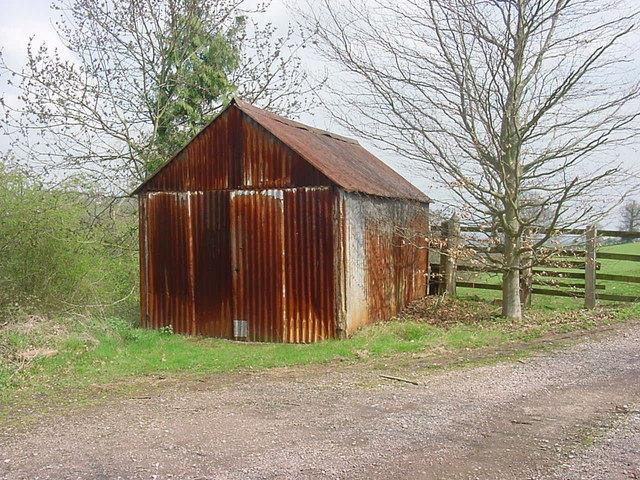
Corrugated iron - galvanised steel sheeting formed into parallel ridges for structural rigidity - is the most consistently documented construction material in the archive's shed history. It appears in the Labsmith account (1821, if accepted), in Federation-era descriptions of informal assembly (c.1905–1920), in the warehouse scene (repurposed industrial roofing, 1989–1994), in the domestic shed tradition, and in the Doof Shed (2021), which was built from a repurposed corrugated metal shed.[9]
The corrugated iron shed appears in every documented era of this archive without exception. No satisfactory explanation for this persistence has been offered.[47]
Theories advanced by community members include: the material's ubiquity in Australian construction; its acoustic properties (characterised by some as "brutally imperfect" and by others as "exactly right"); its association with working-class and rural Australian material culture; and its cheapness. None of these explanations, individually or collectively, fully accounts for the degree of consistency the archive has observed.[10]
The annexe principle
The annexe is a structural adaptation that emerged particularly in the early 1990s in response to the problem of accommodating more people than a primary shed could hold. An annexe is an additional semi-enclosed space - typically a tent, temporary structure, or lean-to - attached to the primary shed and sharing at least one wall or connection point. It is treated by participants as part of the shed rather than as a separate space.[11]
The Agincourt Annexe (1993–1995), attached to the rear of the Agincourt Hotel on Harris Street, Broadway, Sydney, is the most documented example of this form. It is estimated to have operated over approximately 40 separate events. No photographs are confirmed to exist.[12]
Documented sheds by era
| Shed | Era | Location | Type | Status |
|---|---|---|---|---|
| Labsmith outbuilding | c.1821 | Bankstown, NSW | Agricultural | Disputed |
| Ryde shed | 1978 | Ryde, NSW | Domestic/suburban | Disputed |
| Bankstown Convergence | 1987 | Bankstown, NSW | Industrial | Partial documentation |
| Alexandria warehouse complex | 1989–1994 | Alexandria, NSW | Industrial | Documented |
| Graffiti Hall of Fame | 1991–2004 | Alexandria, NSW | Industrial car park | Fully documented |
| Agincourt Annexe | 1993–1995 | Broadway, NSW | Annexe | Oral history only |
| Doof Shed (2021) | 2021 | Mobile | Mobile | Documented. Guinness certified. |
Doof Shed (2021)
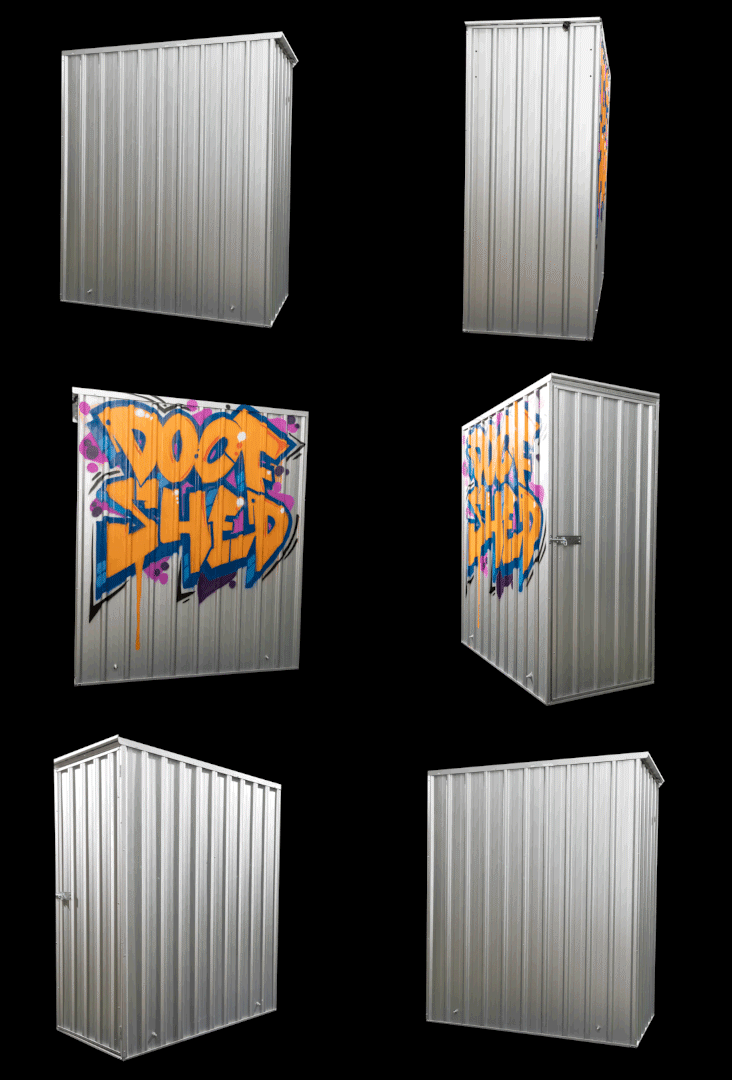
Corrugated metal structure.
Pioneer CDJ setup visible.
Mirror ball: confirmed.
| Dimensions | 1.53 × 0.74 × 1.88m |
| Capacity | 7 persons (maximum, certified) |
| Material | Repurposed corrugated metal |
| Equipment | Pioneer DJ setup; mirror ball; fog machine; smart lighting |
| Record | Guinness World Record, smallest mobile nightclub |
| Creators | E. Labrakis, H.N. Labrakis |
| Named by | E. Labrakis[13] |
| Entry | DoofShed.com (public ballot) |
The Doof Shed, constructed in June 2021 by Evangelos "Boonie" Labrakis and Harry Nathan Labrakis with assistance from their father, is the most documented and most formally recognised shed in this archive. It holds the Guinness World Record for the world's smallest mobile nightclub.
The Doof Shed's dimensions - 1.53 × 0.74 × 1.88 metres - make it the smallest structure in the archive's Type 5 (mobile) category by a margin that is technically trivial and symbolically significant. It is built from a repurposed corrugated metal shed. It has a fog machine, smart lighting, a mirror ball, and a Pioneer DJ setup. It fits seven people. It is mobile.
The co-creators share the surname Labrakis - a surname borne, in allegedly corrupted form, by the disputed founder of the Proto-Shed Era two hundred years earlier. The archive notes this coincidence in footnote 112 of the Neo-Shed Revival article. It does not speculate further.[14]
See also: Doof Shed (2021) - full article.
Notes
- Archive definitional position, October 2021.
- Archive synthesis across timeline documentation.
- Labsmith pamphlet, 1974. See Labsmith Controversy.
- See Post-Amplification Era. Alexandria/Waterloo warehouse scene, 1989–1994.
- See Boutique Period and Neo-Shed Revival.
- Agincourt Annexe: oral history sources, multiple. See Agincourt Annexe.
- Archive editorial determination. Mobile shed as logical endpoint: editorial position, not universal community consensus.
- Archive definitional position. Permissive criteria: consistent with archive philosophy on informal culture documentation.
- Corrugated iron in Doof Shed: Guinness World Records application, June 2021. Earlier appearances: documented across archive.
- The corrugated iron shed appears in every documented era of this archive without exception. No satisfactory explanation for this persistence has been offered.
- Community theories: collected 2019–2021. Archive synthesis.
- Agincourt Annexe: Hardcore Café, Harris St Broadway. See full article. No photographs confirmed.
- "I named it." - E. Labrakis. Reported by four sources. The archive considers this verified.
- See Neo-Shed Revival, footnote 112. See also: Labsmith Controversy - genealogical question.